Tiered Practice Problem Sets for Mixed-Readiness AP Classes
Tailored problem sets close specific knowledge gaps rather than just varying difficulty.

Walk into any AP classroom in October and the room looks uniform. Same textbook, same syllabus, same looming exam date in May. Look closer at what's actually happening in each student's head, and the uniformity disappears. One student can recite the definition of a limit in their sleep. The student next to them is still shaky on the algebra that limits depend on. A single, undifferentiated problem set handed to both of them does something quietly damaging: it serves the already-prepared student adequately while leaving the other one stuck, bored, or both.
AP Calculus AB makes the stakes concrete. The course doesn't forgive a weak link. It compounds it.
Across AP subjects, the same design failure appears in classroom after classroom: readiness gets treated as one variable, when it's actually at least two. There's content fluency, meaning whether a student knows the material. Mixed-readiness classrooms are what happen when thirty students sit at different points on both axes at once, and a single problem set can't address a two-dimensional problem with a one-dimensional tool.
Tiered teaching
The word "tiered" gets misread fast, usually as a synonym for "sorted by speed" or "easier work for the kids who are behind." That's not what it means, and the distinction matters before any of the rest of this holds together.
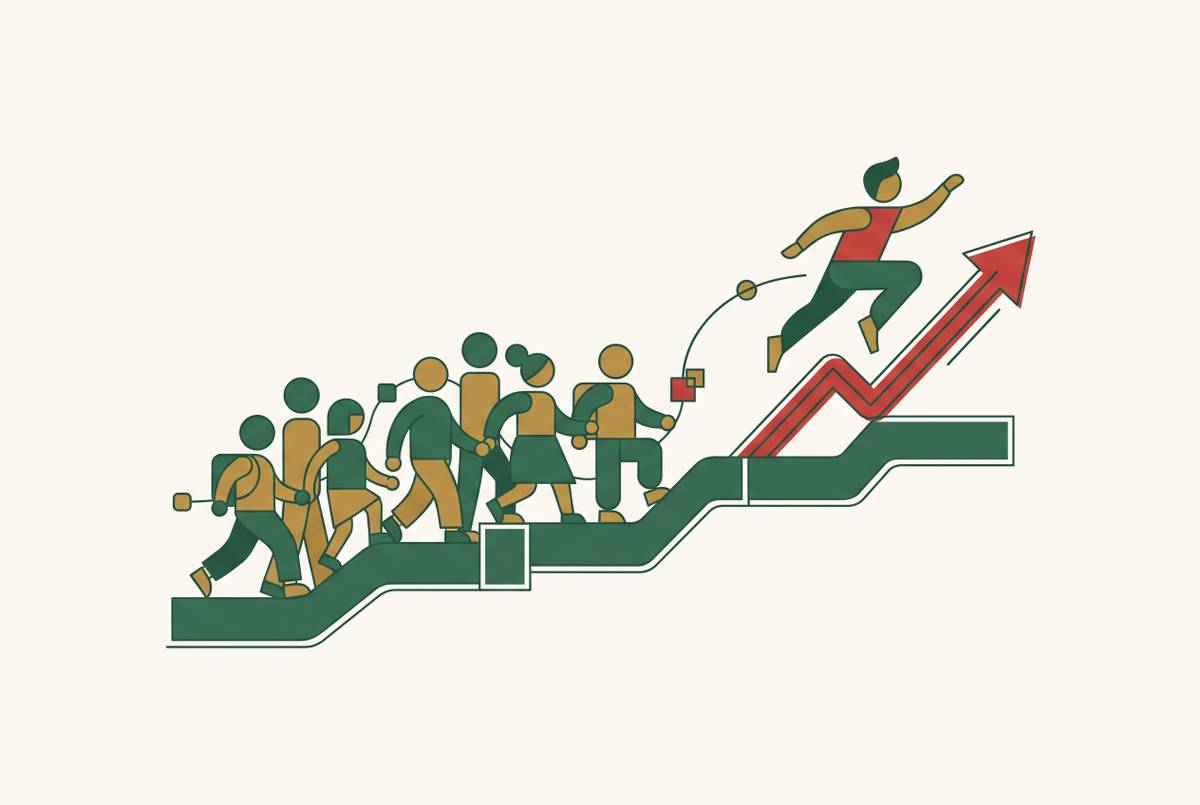
Tiering means scaffolding problem complexity to close specific knowledge gaps at different points along a learning progression. It does not mean permanently labeling some students as the slow group and handing them watered-down content for the rest of the year. The FRQ stays the goal for everyone. Tier 1 is a bridge to it, not a replacement for it.
Scaffolding also isn't only about difficulty level. Others process it better through written explanation, worked-out reasoning in words. Both of those students might be at the exact same difficulty level and still need problems matched to how they currently take in the material, not just problems matched to a difficulty rating.
Two objections tend to surface here. The first: AP students don't need differentiation, because differentiation is for struggling students, and AP students aren't struggling students. That gets the purpose backwards. Tiering targets the specific gap between where a student currently stands and where the exam requires them to be. That gap exists independent of a student's overall academic standing or reputation in the class. A strong student can still have a precise hole in their foundation.
The second objection: college professors don't differentiate instruction, so AP teachers shouldn't either, since AP is supposed to simulate college rigor. This mixes up two different environments. College coursework is the assessment environment, the place where students are expected to already have closed their gaps. AP prep is the preparation environment, the place built specifically to close those gaps before a student ever walks into that undifferentiated college classroom. Asking AP teachers to skip differentiation because college skips it is like asking a coach to skip practice because the game doesn't stop for substitutions.
How knowledge gaps differ from surface-level difficulty
A tier built around surface difficulty, easy, medium, hard, only tells a student how challenging a problem feels. A tier built around knowledge gaps tells a student why they can't solve it yet. Only the second kind produces learning, because only the second kind targets a cause instead of a symptom.
Consider a student who scores low on a timed AP FRQ. That single low score could mean three completely different things. Each of those three gaps calls for a different problem design. Treating all three with the same "harder practice problems" response fixes none of them.
Curriculum prerequisite graphs give this idea a concrete shape. The differential equations problem was never the real issue. It was a symptom of something upstream.
Gap prevalence matters just as much as gap identity. When most of a class shares a gap at the same prerequisite node, the whole class needs a bridging tier built around that node before anyone advances further.
An oral assessment case shows how this plays out in practice. AI-graded scores broken down by topic revealed a striking pattern: on one topic, 8% of students scored at the very bottom of the rubric, with a further group scoring just one notch above that, and not a single student reached mastery. The gap closed because gap detection fed directly into tier redesign, not because students were told to try harder.
A problem set that skips prerequisite gap detection and jumps straight to AP-level difficulty sorting looks differentiated on paper. Unprepared students sit in front of problems they have no foothold for, because the gap that's actually holding them back was never identified, let alone addressed.
Using performance data to identify which gaps to tier around before building a single problem
Tier design has to start with data, not intuition. That's a harder pill than it sounds like, because teachers routinely misjudge which concepts a class has genuinely mastered versus which ones students have only surface-familiarity with. Confidence and competence aren't the same signal.
Gradebook grades make unreliable evidence for this kind of diagnosis. A student who turns in work late, or doesn't turn it in at all, produces a grade that reflects compliance, not understanding. Neither kind of grade tells a teacher where the real gaps sit.
AI-powered tools add another layer on top of that. They can detect patterns across student behavior and performance that a single teacher, managing a full roster and a full course load, simply doesn't have the bandwidth to track by hand. That includes flagging which topics a student is likely to struggle with before that struggle fully appears in a high-stakes FRQ, catching the signal while it's still early.
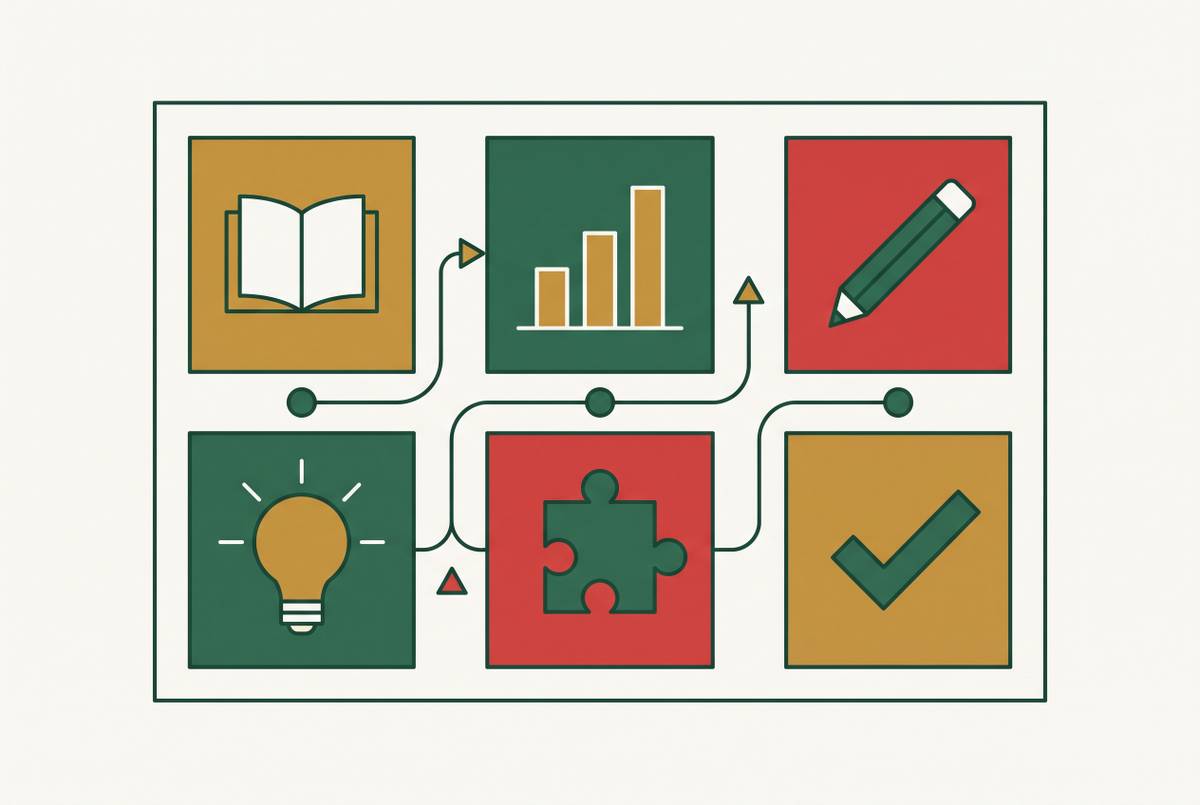
None of this is a one-time step that happens in September and then gets filed away. Gap detection is a loop. The performance data that comes back from a tiered problem set becomes the input for the next round of tier design, adjusting which students sit in which tier and which gaps the next set of problems needs to target.
Designing the three tiers
Once the gaps are visible, the actual construction work starts. Each tier needs a clearly different instructional job to do. Not a different difficulty rating attached to the same job, a genuinely different function in the learning progression.
Tier 1 handles prerequisite bridging. Its job is to target the specific knowledge node a student is missing so they can meaningfully engage with the current AP concept. Problems at this level get scaffolded to isolate that one node, not to simplify the whole topic down to something easier across the board. In AP World History, the gap often isn't content knowledge at all, it's evidence deployment, the skill of building an argument out of facts a student already has. Tier 1 problems there hand the student the historical facts directly and ask only for the argumentative move: the thesis, the connection of evidence to claim, the historical reasoning skill. That isolates the actual skill gap instead of asking a student to retrieve facts and construct an argument simultaneously, which stacks two difficulties on top of each other and makes it impossible to tell which one is causing the failure.
Tier 2 is grade-level applied skill, and it's the baseline every student in the room is moving toward. Tier 1 students are building toward this tier. MCQ and FRQ parity matters a lot here: Tier 2 problems should mirror the exam's actual format, timed, with both multiple-choice and free-response components, so students are rehearsing applied skill under the same conditions they'll face in May, not a looser approximation of it. In AP Computer Science, this tier looks different depending on the course. AP CSA's Tier 2 work is full Java implementation with object-oriented design. Those are not interchangeable, and treating them as the same kind of "coding practice" misses what each exam actually tests.
Tier 3 is advanced extension, reserved for students who've already shown mastery of grade-level material and are ready to meet AP content at or past the exam's hardest level. The mistake to avoid here is building Tier 3 as just a harder version of Tier 2. It should demand a different kind of reasoning entirely, synthesis across multiple units, unfamiliar problem contexts, transfer of a known skill into a situation the student hasn't seen before.
Sequencing inside each tier matters as much as the tier assignment itself. A student advances when they've demonstrated competency at their current level, which means a teacher needs a clear, consistently applied standard for what "ready to advance" actually looks like, not a vague sense that enough time has passed.
How AI grading and automated feedback change tiered practice
Designing three tiers isn't actually the hard part. The hard part is giving students enough fast, specific feedback on their work that they can use the tier they're in to actually learn something, rather than just grinding through problems with no sense of what they got wrong or why. AI grading is what makes that volume of feedback possible for one teacher managing a full classroom.
In STEM subjects, AI graders show strong agreement with human graders, close enough that the feedback a student receives reflects a genuine rubric-based evaluation.
Humanities subjects are a different story: in AP History FRQs especially, agreement rates between AI graders and human graders run meaningfully lower. The practical implication is that AI grading holds up well for the structural elements of a rubric: does the thesis make a defensible, arguable claim with a clear line of reasoning? AI grading is less reliable at judging the nuanced historical interpretation layered on top of those structural elements, and tiered practice built on AI feedback in history needs to account for that limit.
For AP History LEQ and DBQ work specifically, AI tools built to apply the official AP rubric can return scored, annotated feedback within seconds. That speed matters enormously for a teacher running three tiers at once, since manual grading simply can't match that iteration pace when every student in the room is working on a different kind of problem at the same time.
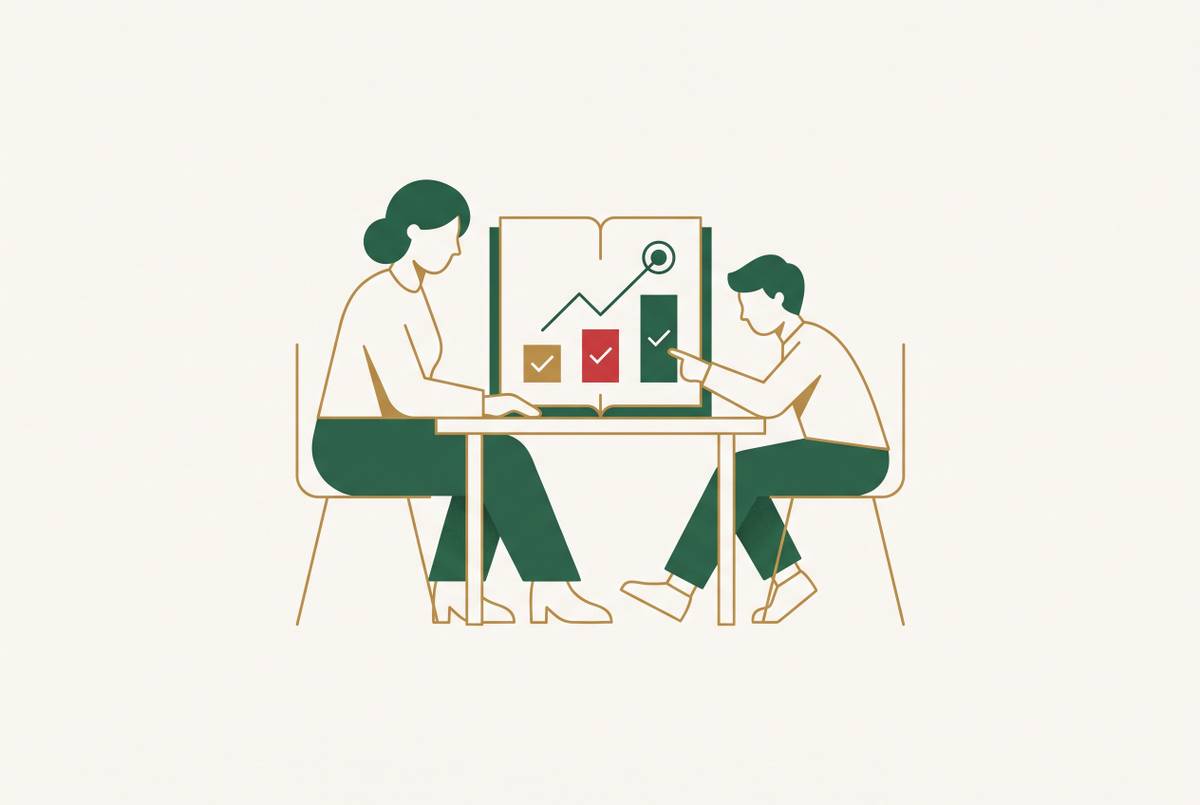
Across FRQ grading generally, the most useful kind of AI feedback tells a student three things: which rubric points they earned, which ones they missed, and what a top-scoring response would have included instead. That specificity is what keeps a student in the right tier and moving forward, rather than repeating the same mistake on the next five problems without understanding why it keeps happening. Grading tools built around this standard aim to do more than mark an answer right or wrong. They identify where a student's thinking actually breaks down and what conceptual gap the error points back to, feeding that information straight back into the next round of tier placement decisions.
Managing a three-tier classroom without tripling teacher workload
Running three tiers sounds like three times the prep work for one teacher. The cost front-loads into the design phase, and once the gap detection data exists, once the tiered problem banks are built, once the AI feedback loop is running, the ongoing management cost drops well below what it takes to build a new tiered set from scratch every single week.
The design phase costs the most. A tier structure built to be reused and refined across sections, and across years, turns that upfront investment into something that pays off repeatedly, saving time on a weekly basis.
Small-group differentiation is the classroom structure that actually makes three simultaneous tiers workable day to day. The tier structure becomes a group structure, which means a teacher is running one classroom with three groups in it, not three separate lesson plans stacked on top of each other.
The AI feedback loop closes the last gap in workload. Students can self-correct and advance within their tier without waiting on a teacher to review every single problem by hand. That cuts down the check-in load that would otherwise multiply fast with three tiers running in parallel, each needing its own attention at its own pace.
Connecting tiered AP practice to SAT prep for juniors managing both simultaneously
Juniors carrying a full AP course load aren't just preparing for AP exams in May. Many of them are prepping for another standardized college-entrance exam at the same time, often in the same semester, often with the same limited number of study hours to split between the two. A tiered AP problem set built around genuine gaps rather than surface difficulty doesn't just serve the AP exam. It does double duty.
Consider what a Tier 1 bridging problem in AP Calculus actually targets: algebraic manipulation, precise reading of a word problem, the ability to isolate a variable or interpret a function's behavior. A student working through a prerequisite gap in limit notation is, at the same time, reinforcing exactly the kind of algebraic fluency that exam rewards.
The same logic holds on the verbal and writing side.
None of this means a tiered AP problem set replaces dedicated prep for that other exam. It means the diagnostic habit built around AP tiering, finding the actual gap instead of guessing at a difficulty level, carries over cleanly to how a junior should think about prep for that other exam too. The gap-finding skill, once built, doesn't stay locked inside one exam.
Sources
- AP Computer Science A Syllabus and Planning Guide 2025–2026
- Differentiation approach in education: Tailoring instruction for diverse learner needs - PMC
- The Effect of Differentiated Instruction on the Academic Achievement and Opinions of 3rd-Grade Students in Science Education: A Mixed-Methods Study
- ALIGNAgent: Adaptive Learner Intelligence for Gap Identification and Next-step guidance
- Teaching All Students to High Standards in Mixed-Ability Classrooms
- Detecting Knowledge Gaps from Conversational AI Interactions Using Curriculum Prerequisite Graphs
- A.C.C.E.S.S.: All Children Challenged and Equipped for Success in School
- AI Grading Tool for High School Teachers - Grades 9-12 & AP