AI Tutoring Tools as Homework Supplements Without Replacing Classroom Discussion
AI tutoring handles individual practice while teachers lead classroom discussion and debate.

AI tutoring tools can strengthen homework without replacing classroom discussion by handling individual practice and feedback while teachers lead debate and defended reasoning. For AP free-response questions, instant AI grading can help students revise, but the evidence here does not show that any named tool scores as well as expert human readers. The useful distinction is between feedback that helps students think and a score that merely looks authoritative.
Why classroom time is running out for the work AI can do better
A classroom has one timetable and many starting points. Some students need another explanation of a prerequisite, while others are ready to apply it to something harder. A single teacher can adjust the pace, but cannot give every student a different lesson at the same moment. Moving faster leaves some students behind. Moving slower holds others back, without necessarily uncovering why the struggling students are stuck.
The work that fixes this mismatch is painstakingly individual. A teacher asks a question, hears where the reasoning breaks, tries another explanation, and checks whether it helped. They may need to go back and forth several times before it is clear what the student has missed. A wrong answer is often only the surface symptom. Finding its cause requires attention that a class period cannot stretch to provide for everyone.
When catching students up consumes the period, discussion, debate, and collaborative reasoning lose their place. These are part of the “real” teaching, where students listen to other interpretations, defend a claim, and revise it in response to another person. Yet the work that needs a room full of people gets squeezed by work that often needs a conversation with one.
This is a scheduling problem. The hours are fixed. The need for individual attention is not. Asking teachers to personalize everything within those hours is rather like asking a timetable to develop compassion. Which parts of learning genuinely need everyone together, and which could happen at each student’s pace elsewhere?
How AI tutoring actually closes knowledge gaps — the core mechanisms
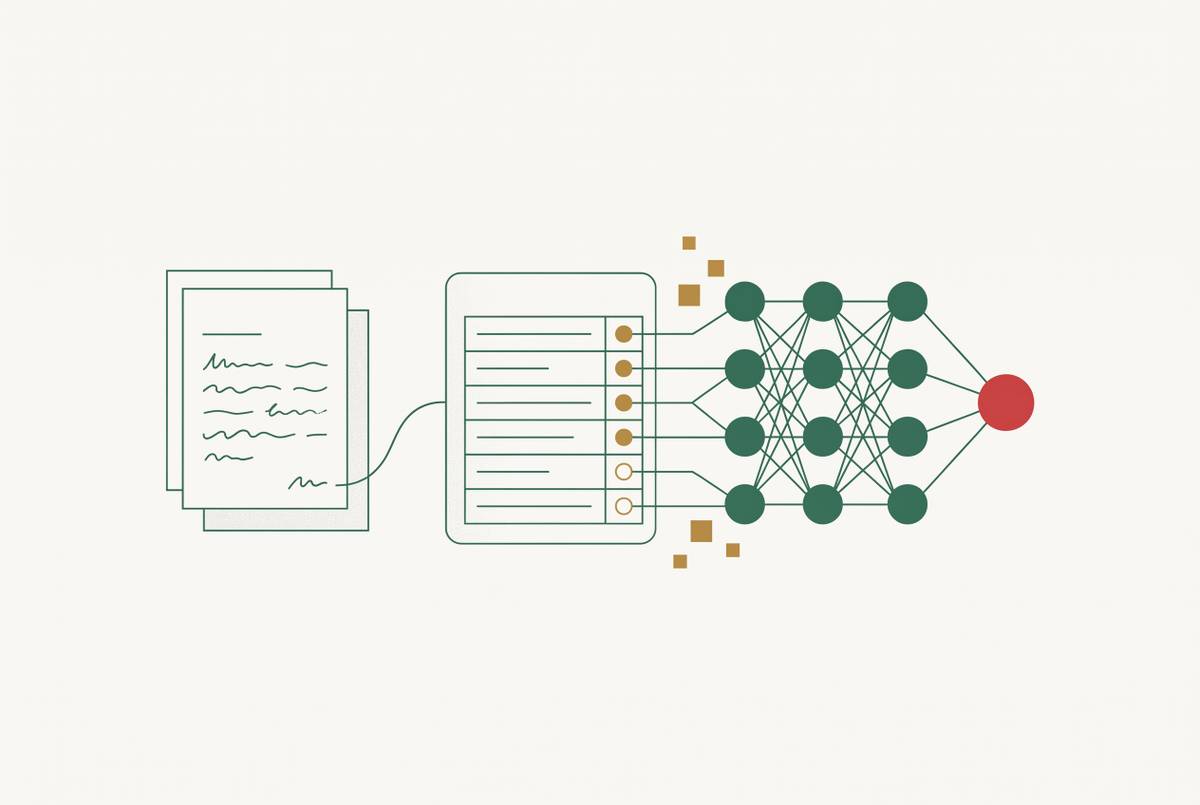
An adaptive tutor differs from a static resource because the student’s response changes what happens next. A diagnostic identifies existing knowledge and points of confusion, then selects an exercise, explanation, or example at an appropriate level. A stronger tutor builds a profile of how students learn as well as sorting them into easy, medium, and hard lanes. That gives individualized homework a different purpose from simply assigning more questions.
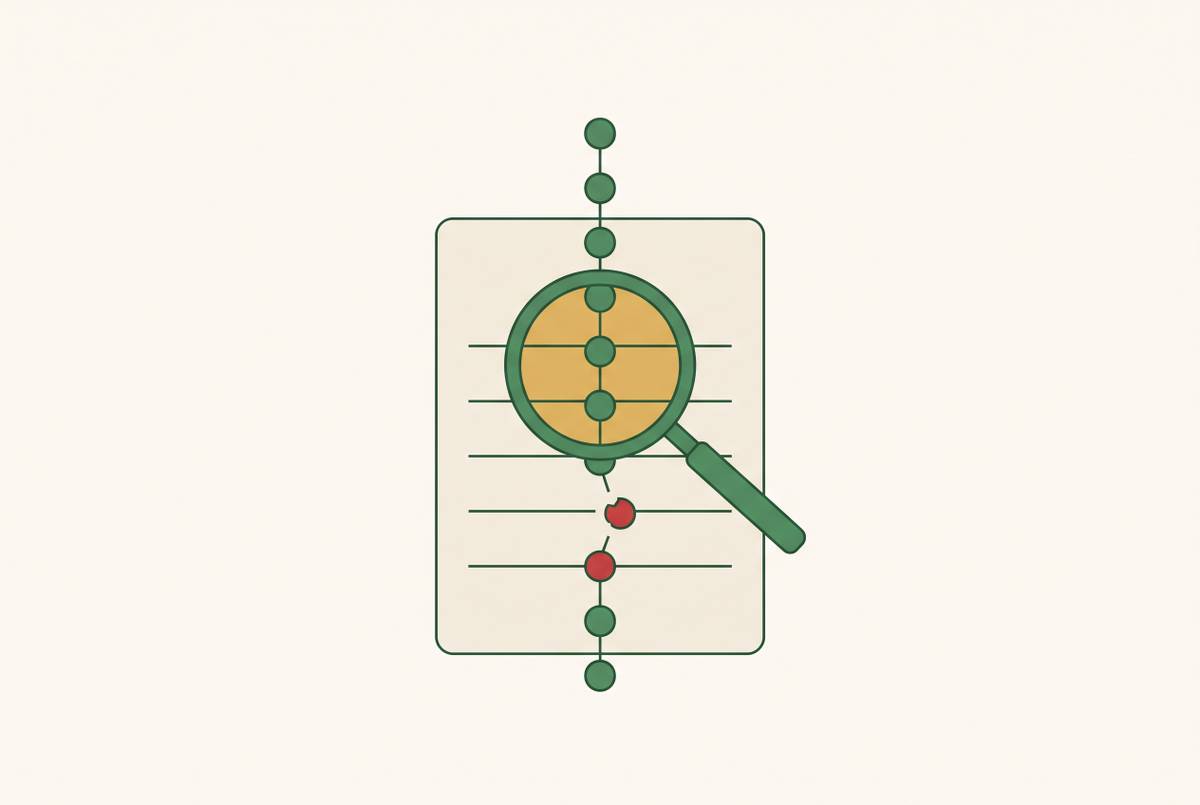
Gap detection makes this process more precise. After a student submits work, a system can identify concepts not yet mastered and direct practice toward them. Repeated checks let the student revisit a prerequisite without waiting for the whole class to return to it. Youssef Medhat and colleagues’ Detecting Knowledge Gaps from Conversational AI Interactions Using Curriculum Prerequisite Graphs examines how student questions can be mapped to curriculum topics. The study suggests that those conversations can help show where students are stuck, so they have a use after the chat ends.
Feedback can also arrive before the final submission. A student works on a draft, receives targeted guidance, and revises instead of waiting until a grade closes the conversation. The timing changes the learning opportunity. Feedback becomes something to use while thinking is still in progress.
However, adaptation alone does not guarantee useful mental effort. Socratic questions, hints, and step-by-step checks are designed to leave part of the problem with the learner. That distinction is especially important for AP preparation, where students must retain and use substantial content over a long study period. Targeted practice can return to weak concepts as they emerge. A static review resource cannot make that choice for the individual reader.
What happens in the classroom when the gap-filling moves outside it
When students work through what confuses them before class, the room can be used in a different way. Instead of repeating an explanation for each gap, the teacher can ask students to defend, compare, and challenge ideas. Homework prepares students to participate, while classroom activity tests what they can do with that preparation.
Yusuf Pisan’s Teaching Intro AI When the Tools Can Do the Homework documents one concrete redesign at the University of Washington Bothell. CSS 382 in Spring 2026 enrolled 46 students over a ten-week quarter. The undergraduate AI course retained search, adversarial search, Markov decision processes, reinforcement learning, and natural language, while adding a strand in which students built a large language model from scratch. Students had to understand the kind of tool they used. The AI policy moved from unmentioned in 2023 to required in 2026.
Assessment changed with it. Examinations were removed, and the course used in-class exercises, reflective writing, and a defended team project. Those tasks placed weight on presence and reasoning that students could explain, rather than homework an AI could complete without attribution. A participatory ethics sequence also produced a student-endorsed “Student Bill of AI Rights” governing the instructor’s own use of AI.
The report documents experience. It does not prove that students learned more because of AI homework, or that every course should drop examinations. Its value is more specific. It shows how an instructor can move homework into AI-mediated territory while reserving classroom assessment for defended reasoning, ethical deliberation, and collaborative work. The teacher’s role becomes concentrated in those exchanges.
Teacher oversight is what separates structured AI use from unsupervised chaos
That division only works if someone designs it. Leaving students to choose any chatbot and request any kind of help does not create a tutoring model. It creates a collection of private bargains with software. Some bargains may involve genuine practice. Others may exchange the assignment for an answer and call the transaction learning.
The 2025 Chegg Global Student Survey reported that 80% of students had already used AI to support their university studies before faculty guidance existed. The practical comparison is therefore not simply AI use against an untouched world without it. It is structured use against the unmanaged use already happening. A policy that ignores the latter does not remove it from homework.
Teacher design gives the interaction boundaries. The teacher specifies what help the system should provide, which rubric it should apply, and what the student must produce. Visibility then makes those boundaries reviewable. Session records, chat transcripts, or performance data can help an instructor see how the student worked as well as the polished final answer.
The agenda belongs to the teacher, even when students work individually.
No dashboard creates extra hours in the school day. Teachers may leave some exchanges unread, and even with controls they can make poor judgments. Still, an interaction that can be reviewed is different from one that remains invisible. Structured homework offers a way to distinguish guided practice from answer retrieval before both arrive wearing the same tidy formatting.
The strongest objection — cognitive offloading and what it actually requires to answer
A student can ask for hints, follow them faithfully, and submit original work while doing less thinking than the assignment requires. If help comes whenever the work gets hard, the student may become dependent on it and never learn to stay with what confuses them long enough to work it out.
This objection deserves more than an assurance that the tool is educational. A sequence of small hints can still do the intellectual steering. The student takes the steps while the system chooses the route. What looks like a student sticking with the work may be them following a very patient navigator.
The answer begins with how assistance is released. Making the learner try before they can get help means they have to do some thinking first. Socratic prompts can then ask for reasoning. Neither feature is a magic spell. Their value lies in keeping the student responsible for a part of the task that cannot be skipped.
Teacher-visible transcripts add another check. They can show whether the learner developed an explanation or merely followed one placed in front of them. Classroom discussion then gives the teacher a human setting in which to probe that understanding.
Feedback quality raises a separate concern. A vague response may sound encouraging without giving the student anything useful to revise, while an instant score can appear more exact than the evidence warrants. For AP free-response practice, speed and scoring accuracy are different claims. The case for AI support depends on useful guidance and teacher judgment.
What AI tools help with AP free-response feedback, and what does good design look like?
The available tool descriptions support only comparisons of learning features. That limit is useful to a buyer. A tool can be good at prompting revision without having demonstrated that it scores AP essays like expert human readers. The first filter is therefore whether the interaction develops reasoning. Claims about grading accuracy require their own evidence.
ChatGPT Study Mode changes the interaction when deliberately activated. Instead of treating answer delivery as the goal, it uses hints, questions, and step-by-step prompts that ask the learner to do more work. Its fit here is guided individual practice. Because the mode must be chosen deliberately, using the product and using it as a tutor are not automatically the same thing. Nothing in that description establishes AP-specific scoring accuracy.
Gemini Notebook, formerly NotebookLM, offers a different advantage through source-grounded study. It works from the student’s lecture notes, PDFs, and readings. That helps connect review to the course actually being studied. It is a fit for course-specific preparation, but working from relevant sources does not by itself demonstrate accurate free-response grading.
SchoolAI emphasizes teacher-controlled interaction, while Claude for Education belongs to the institutional tool landscape. The former’s Spaces let teachers set the agenda and monitor learning. The latter offers flexibility that still depends on teacher design and disciplined use.
For AP preparation, the concrete criteria are exam-difficulty practice, content-gap detection, repeated practice with feedback, and spaced review. For free-response work, useful feedback must show the student what to improve before they try again. Instant grading may shorten that loop, but the score alone is not the loop.
How to use this division of labor without letting AI erode what the classroom is for
Outside class, AI can support individualized practice, first-pass feedback on drafts, gap identification, and targeted re-teaching. Spaced review and retrieval practice also fit this setting because students need different amounts of repetition. Inside class, the teacher and group can concentrate on discussion, debate, collaborative reasoning, and ethical deliberation. When students explain and defend their reasoning in real time, teachers can assess that shared work.
To preserve that division, teachers should require an attempt before help becomes available and choose tools that offer visibility into student sessions. Shared expectations should distinguish guided reasoning from answer retrieval. Class time can then include a debrief of what students learned from AI feedback. That makes homework part of the conversation. It also gives students a reason to understand the guidance.
The Bothell experience adds an important point about who sets the rules. Students spoke against AI-generated course materials even though they had to use AI themselves. Their bill of rights included a provision requiring the instructor to personally complete any AI-generated assignment before issuing it. Transparency was not a one-way demand on students.
The aim is to place individual practice where it can receive individual attention, and shared reasoning where people can question one another. With teachers as the architects of that arrangement, AI homework supplements give classroom discussion more room to breathe.
Sources
- Teaching Intro AI When the Tools Can Do the Homework: A Course Redesign and a Student Bill of Rights
- Detecting Knowledge Gaps from Conversational AI Interactions Using Curriculum Prerequisite Graphs
- Designing Against Deskilling: Metacognitive Feedback Reduces Cognitive Offloading to LLM Assistants
- Cognitive Offloading in the Age of AI: Are Students Thinking Less or Learning Differently?