Which AI Tools Grade AP Free Response Questions and Pinpoint Reasoning Breakdowns
AI tools now grade AP free responses by pinpointing exactly which rubric elements students missed.

AI-powered AP practice tools including FRQ Atlas, FRQ Review, and Passionfruit offer free-response grading and feedback, while CS++, EssayGrader AI, and GradingPal support teacher-led assessment. The useful distinction is not speed alone. A tool that identifies the missed rubric point helps explain a score, but one that traces the reasoning breakdown helps show what the student needs to learn next.
Why AP free-response grading is uniquely hard to do well — for humans and AI alike
AP free-response scoring is additive. Each point belongs to a specific task or move in the response. AP Lang and AP Lit essays use a 6-point rubric across three rows, which are thesis at 1 point, evidence and commentary at 4 points, and sophistication at 1 point. Beautiful writing cannot substitute for a defensible thesis. An awkward essay can earn that point when a polished essay does not.
AP History uses 7 points for the DBQ and 6 for the LEQ, organized around thesis, contextualization, evidence, and reasoning. Those elements make the award of each point separately checkable. Science and math FRQs extend this logic into the working itself, awarding credit for labeled calculations, correct substitution, and sound reasoning even when the final number is wrong. A grader must inspect how the student reached the answer.
Human AP readers are calibrated each June against anchor papers, recalibrated during a multi-day reading, and back-read by table leaders. Consistency is built into the process. A classroom teacher, meanwhile, can face well over a thousand rubric-scored responses across a year of practice in a large AP class. Full-fidelity hand-grading becomes unsustainable by spring, so practice frequency can fall just when students need it most. Repetition without element-level feedback leaves students doing more work without knowing which part needs repair.
What “rubric-aligned AI grading” actually means architecturally — and why it differs from asking a chatbot for feedback
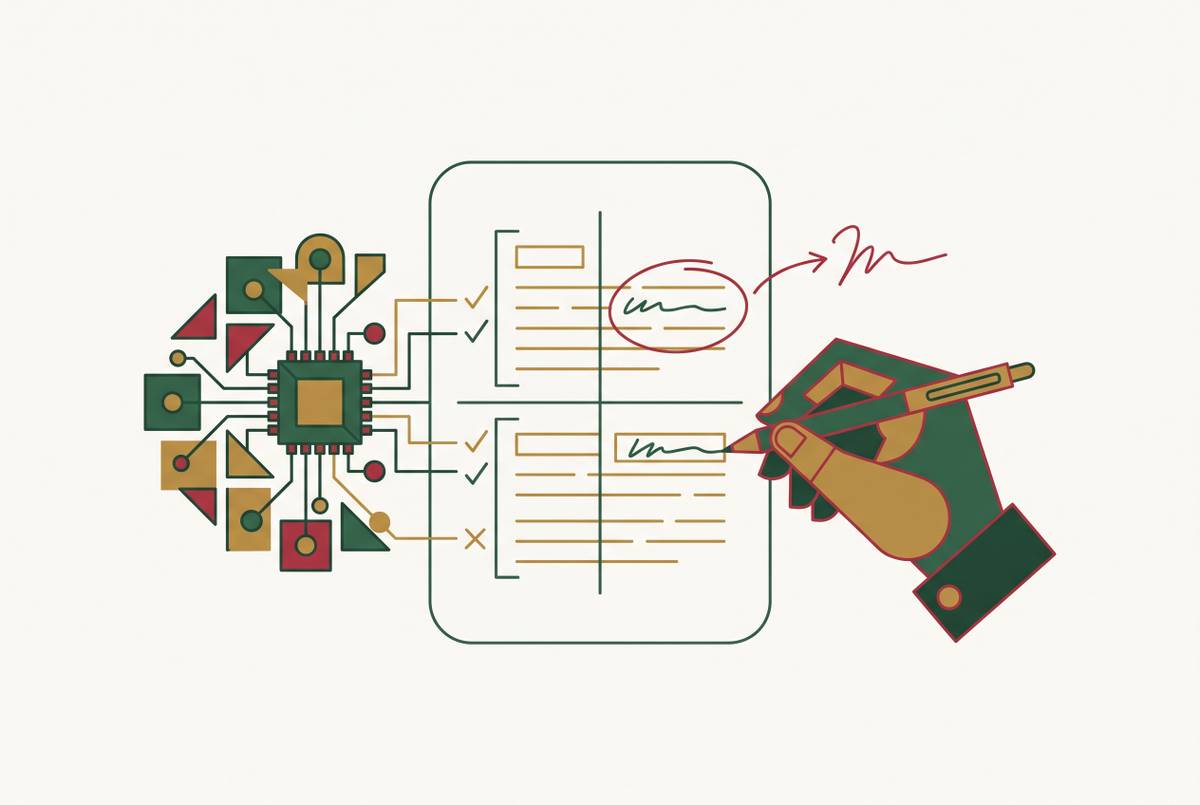
Rubric-aligned grading breaks the assessment into discrete decisions. Did the response earn this element, yes or no? Each decision comes with a short explanation tied to the work, producing something closer to an AP Reading scoring sheet than a paragraph of impressions. The rubric supplies the structure for the judgment. Instead of asking whether an essay seems persuasive, the system must separately assess its thesis, evidence, and commentary.
For quantitative FRQs, step-level grading means reading the handwritten or typed working and awarding points as they are earned. A correct substitution can receive credit even if a later sign error spoils the result. “One error, one deduction” logic also prevents that mistake from attracting fresh penalties wherever its consequences appear. The grader needs to locate the start of the cascade. That is a different task from checking a final number.
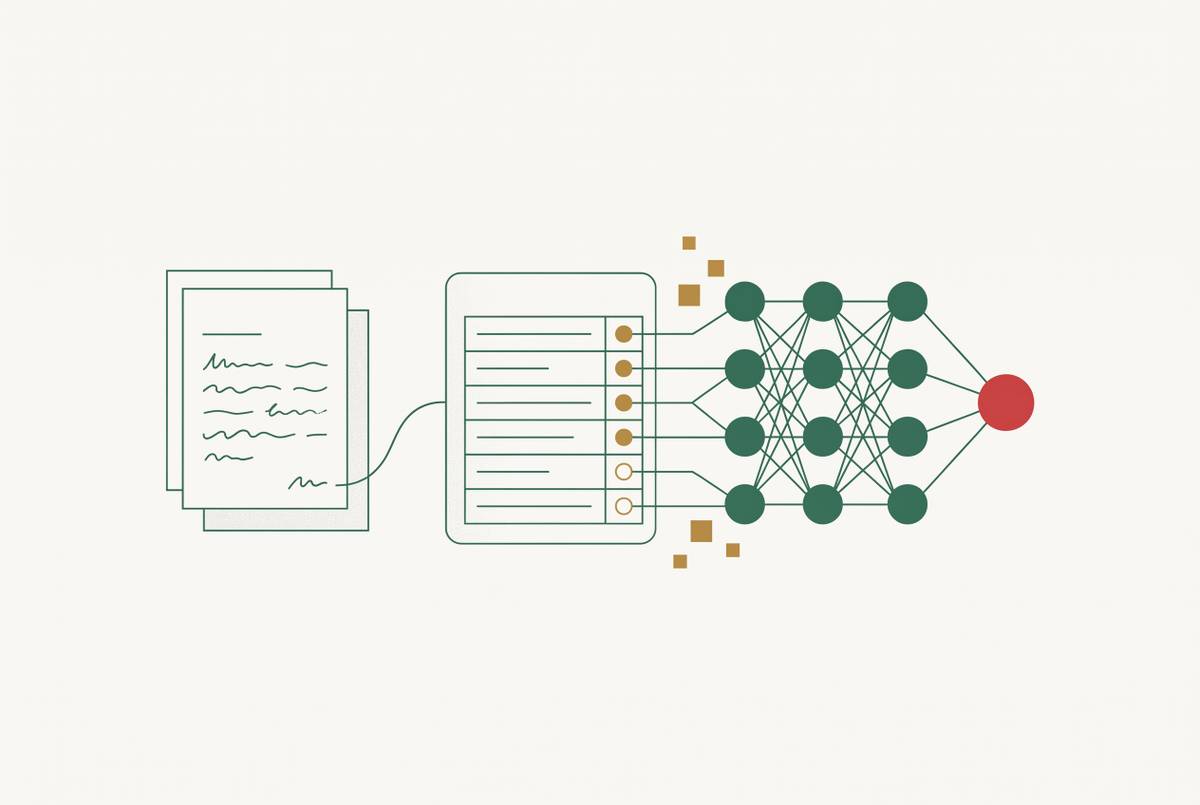
For written responses, the grading pipeline assembles the question, rubric, student response, and relevant learning objectives. This context constrains feedback to particular elements of reasoning without simply supplying the correct answer. Handwriting support extends the process to paper practice by preserving arrows, fractions, diagrams, and unit labels before grading. Reading the work comes before judging it. A lost unit label or misread fraction can change what the grader thinks the student did.
By contrast, pasting an essay into a general chat interface does not itself establish an element-by-element scoring process. Without the published rubric and a structure that forces separate decisions, general feedback can blur a defensible thesis into the broader quality of an argument. The architectural test is whether each judgment is anchored to a specific requirement, including partial credit where the rubric permits it.
What AI tools can grade AP free-response questions and give detailed feedback?
FRQ Atlas is a tool for students working on AP Physics 1, Physics 2, Physics C Mechanics, and Physics C E&M. It organizes questions by year and topic and grades against actual exam rubric criteria, explaining earned and lost points with suggestions for improvement. Students can type responses or upload handwritten equations and diagrams. Paper practice fits the workflow. It also offers PDF and diagram annotation and tracks attempts, average scores, and progress across subjects.
FRQ Review covers the full range of AP FRQ subjects and accepts prompts from teachers, review books, or practice sets. Its distinguishing feature is rubric flexibility. Students can paste their teacher’s rubric or official scoring guidelines, or let the AI generate a defensible rubric from the prompt. Feedback arrives in seconds without sign-up, while an account is needed to save history. Its Plus tier removes ads, speeds grading, and saves unlimited history.
CS++ AI FRQ Grading is built for teachers of AP Computer Science A and AP Computer Science Principles. It grades a full class rapidly against the 2025-26 CED rubric, with every score reviewable and editable before publication to students. Grading comes with Class, Department, and District classroom plans, while all CS++ lessons are still free.
EssayGrader AI serves teachers handling long-form assignments, including FRQs, DBQs, LEQs, SAQs, synthesis essays, and rhetorical analysis. Its library contains 800+ pre-built rubrics, with a builder and options to upload or customize rubrics. That gives essay-heavy courses room for custom assignments. It supports bulk upload, photos and scans of handwritten essays, and native integration with Google Classroom, Canvas, and Schoology. Scores and feedback are editable, with AI and plagiarism detection also built in.
GradingPal covers math, science, English, history, research writing, and exams, showing evidence beside proposed rubric scores for teacher review. Its classroom insights identify recurring strengths and gaps in approved work across the cohort. The focus extends beyond the individual paper. It allows 50 free submissions per month and works with Google Classroom now, with Canvas and Schoology available on a school plan. GradingPal states that it is FERPA, COPPA, SOPIPA, NY Ed Law 2-d, and GDPR compliant, is CASA Tier 2 verified, and does not use student work to train AI models.
Passionfruit helps individual students, teachers, and schools with AP and SAT study, with no limit on practice problems and with AI-powered grading. Its focus is the knowledge gap behind the missed point. It tracks what students understand, where their reasoning breaks down, and what stands between them and mastery, then helps fill those gaps. That makes it relevant to students seeking follow-up beyond a score and to classrooms seeking to close gaps at scale.
What separates a score from a diagnosis — the four things that distinguish surface-level grading from reasoning analysis
The first test is element-level feedback. Can the tool identify the precise rubric move that was missing? “Your argument was weak” gives the student little to check, while “your thesis does not answer the prompt’s line of reasoning” points to a specific failure. These comments demand different kinds of revision. A lost thesis point is not repaired by adding evidence to a claim that still does not answer the question.
The second test is step-level error location in quantitative work. In Chemistry, Physics, and Calculus, a sign error in the discriminant is a different problem from a missing unit label. Both may cost credit, but they do not reveal the same learning need. A useful diagnosis locates the line where the reasoning broke down and distinguishes the original error from its downstream effects.
The third test is the source of the rubric. A published rubric for a specific exam year anchors practice to the actual scoring standard, while a generated rubric adds uncertainty about the standard itself. Flexibility is useful, but it is not calibration. Generated rubrics can serve teacher-assigned prompts that have no official scoring guide, whereas official rubrics are the stronger basis for exam-score prediction.
The fourth test is pattern tracking across attempts. Five middling scores could reflect one recurring weakness or five different mistakes, and those situations call for different follow-up. A history of totals alone does not explain the pattern. The diagnostic value lies in tracking which elements or knowledge gaps recur. At classroom scale, GradingPal’s analysis of approved work shows how that evidence can become a shared basis for planning the next lesson.
Together, these tests distinguish a scoring record from a learning diagnosis. Rubric provenance establishes the standard being applied. Tracking then shows whether the weakness persists. A tool must connect that evidence to the understanding the student lacks.
The real limits of AI FRQ grading — what the research says about bias, reliability, and over-reliance
Automated Essay Scoring research identifies bias as an empirically grounded concern, particularly for English Language Learners. Both end-to-end and rubric-based approaches can amplify biases present in training data across demographic groups. A rubric is not an immunity certificate. Transparent criteria make a judgment easier to inspect, but do not establish that every judgment is fair. AI scores should be treated as formative first passes.
Reliability also depends on what the system is trying to match. A tool that mirrors a teacher’s grading style is not necessarily calibrated to the published AP standard students will face in May. Those are related but different targets. Grading against the official rubric brings the assessment closer to the relevant standard, though the model still has to interpret the response correctly. A familiar-looking score is not, by itself, proof of a reliable assessment.
Over-reliance is a separate risk even when the feedback is right. Metacognitive laziness means accepting the AI’s judgment without checking it against what the task asks for. A student can learn to please the grader without understanding why a move earns credit. Higher-scoring revisions do not automatically show durable understanding. The recommended use is to reason actively about why a point was missed, rather than have AI produce a revision that earns a better number.
Human review therefore remains the safeguard. CS++ describes its grading as “a first pass for teacher review rather than a final authority,” and teacher-facing tools provide review and editing before feedback reaches students. The exam itself still uses human readers. For practice, the appropriate material is released past exams, practice FRQs, and teacher-assigned prompts. Live exam content must stay out of these tools.
How to choose the right tool based on your actual situation
For students practicing independently, the starting point should be subject coverage, element-level feedback, and access to the official rubric. FRQ Atlas is free and requires no account, making it a direct option for AP Physics practice with actual exam criteria and step-level quantitative feedback. FRQ Review covers more AP subjects, lets students supply a rubric, and is also free without an account. The choice turns on the assignment. A physics response from a past exam and a custom classroom prompt may need different rubric workflows.
For AP Computer Science teachers, CS++ fits a more specific need. Its subject focus, class-wide grading, and editable first pass suit teachers who want help with assessment while retaining control before students see results.
For teachers handling essay-heavy AP courses, EssayGrader’s rubric library, customization, bulk upload, and LMS connections support varied writing assignments. For departments seeking recurring gaps across subjects, GradingPal’s cohort analysis is the more relevant distinction. School adoption adds another layer of requirements. Its stated compliance commitments, integration availability, and submission allowance belong in that decision as well as the quality of feedback.
Students whose repeated misses point to gaps beneath the rubric should look for tools that find knowledge gaps and tailor follow-up to what each student needs. Passionfruit fits that situation because its focus extends from scoring to tracking breakdowns across attempts and helping plan how to address them. The final test goes beyond the number. Does the tool tell you which rubric element you missed, or why your reasoning broke down there and what you need to understand to fix it?