Diagnosing Recurring SAT Errors by Knowledge Gap Rather Than Question Type
Trace SAT mistakes to their root cause, not just question type.
SAT prep with personalized knowledge mastery should identify why an answer went wrong. Diagnosing recurring SAT errors by knowledge gap means tracing mistakes to a missing rule, an overlooked constraint, or a faulty method, then matching the fix to that cause. A useful tutoring diagnosis changes the next study session.
Why the same wrong answers keep coming back
A student gets “Linear Equations” wrong three times, drills more algebra, and gets it wrong a fourth time. The obvious verdict is that more algebra is needed. But that verdict skips the question that would make the extra work useful. What, exactly, keeps breaking down inside those questions?
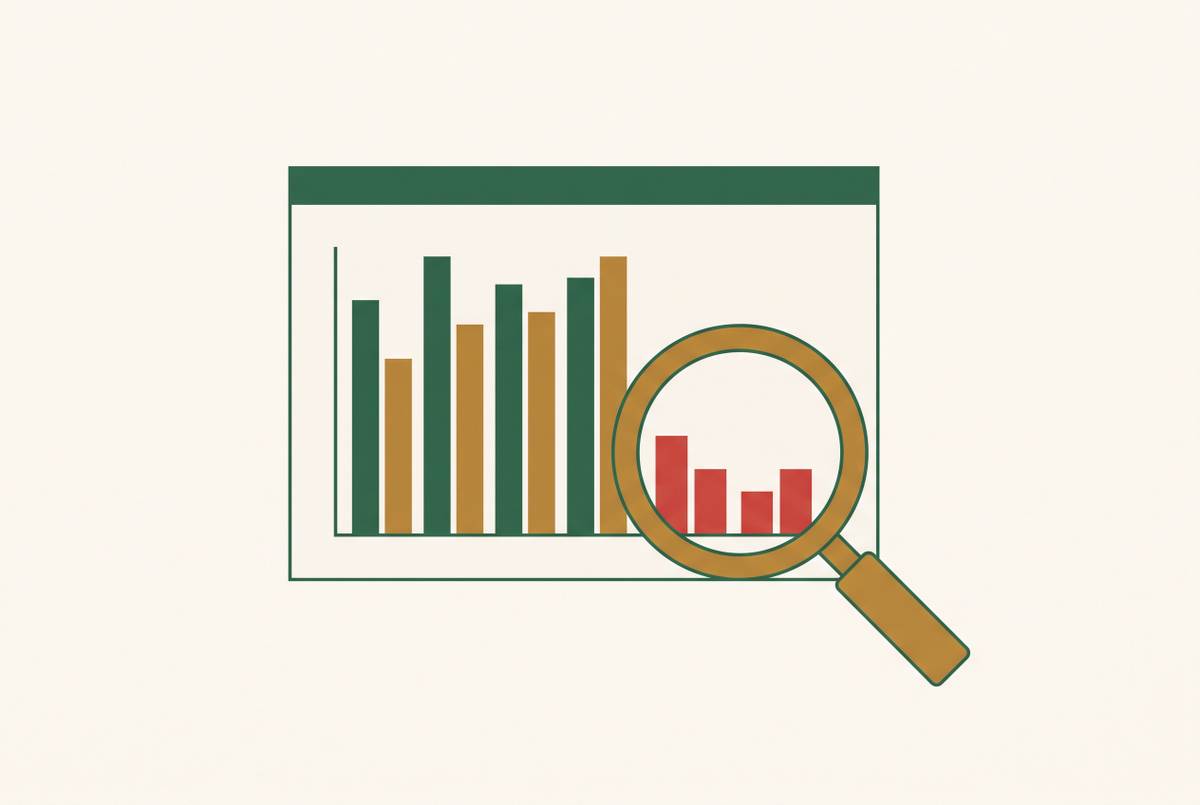
Take a practice test, sort the mistakes into categories such as “Linear Equations” and “Command of Evidence,” then practice the weakest category. This feels orderly because it follows the test’s architecture. A question-type label describes what the test asked. Two students can miss the same question because one does not know the rule and the other applies a bad method.
More practice is not the diagnosis they need. Without that diagnosis, extra questions can exercise the same weakness without repairing it, like giving a wobbly chair a busier social calendar.
What a knowledge gap actually is, and how it differs from a wrong answer
A wrong answer is an outcome, while a knowledge gap is a cause. For study purposes, that cause includes more than missing facts. A student might know a rule but fail to notice where it applies, or use a shortcut that defeats otherwise sound knowledge. The distinction becomes clearer when the question stays the same and the cause changes.
Consider a subject-verb agreement question. A content or procedural gap means the student does not know, recall, or correctly apply the agreement rule. A misread or missed constraint means the student knows the rule but mistakes another noun for the subject. With a reasoning or method gap, the student uses whatever sounds right as the test for agreement. Each cause produces a wrong answer and requires different work to correct it.
Confidence adds another dimension to this diagnosis. A high-confidence wrong answer may reveal a misconception or an unreliable shortcut. A low-confidence correct answer can signal a need for fluency. A correct answer is welcome, but it is not a complete account of understanding.
This is why repeated practice can sometimes hide a gap. Familiarity with a question format can feel like mastery even when the student cannot solve it independently. A weak method can also become comfortable through repetition. Comfort is not a certificate of correctness. Diagnosis therefore needs to establish whether both the answer and the dependability of the thinking behind it improved.
Why topic-level patterns, not individual errors, are where the diagnostic signal lives
A missed word may be an isolated lapse, while a faulty inference may reflect a method the student uses every time. The same cause recurring across questions and study sessions gives a tentative diagnosis weight, especially when apparently different question types expose the same weakness.
Georgia Tech’s 2026 study, Detecting Knowledge Gaps from Conversational AI Interactions Using Curriculum Prerequisite Graphs, gives this idea a structural basis. The study matched questions asked of a conversational AI teaching assistant to curriculum topics linked by prerequisite relationships. Those links show which concepts build on earlier ones. Grouping questions by topic provided a more robust signal of difficulty than treating each question as a separate diagnostic event. The work took place in a graduate-level AI course, so its relevance here lies in its structural insight, with its results confined to that setting.
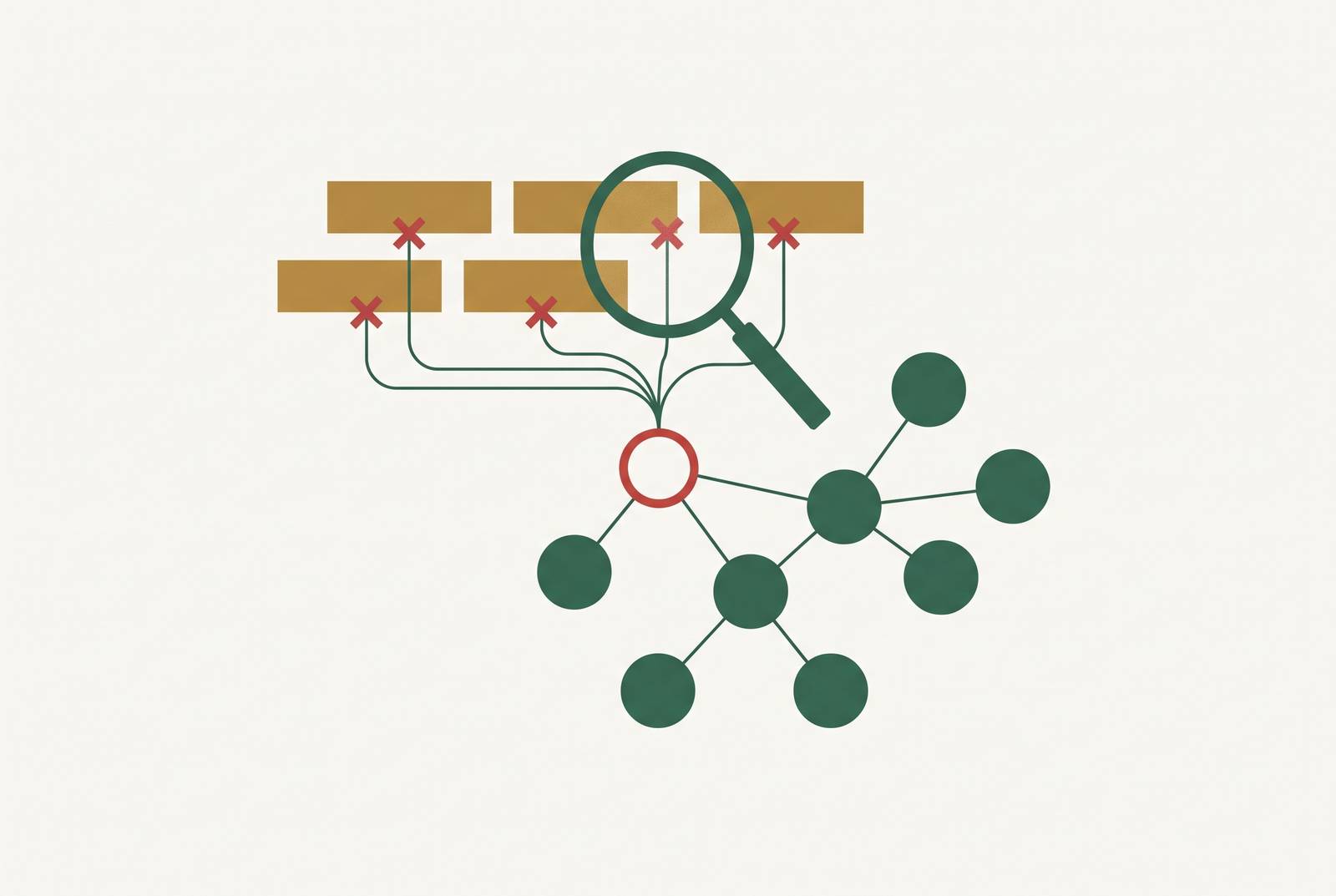
For an SAT example, a student missing questions across “Heart of Algebra,” “Linear Functions,” and “Systems of Equations” may not have three independent weaknesses. One upstream gap in linear relationships could produce errors in all three areas. A prerequisite is a load-bearing concept. When it is shaky, the trouble can appear in every topic that rests on it.
That possibility changes what a pattern means. Several labels in an error log may describe several symptoms of one cause, rather than a growing inventory of things the student cannot do. Finding a shared dependency requires looking beyond the questions’ common involvement with algebra. Repeated evidence across different questions is what makes that diagnosis credible.
How to build an error log that captures cause, not just category
To put this distinction into practice, a student needs an error log that records thinking. The manual version requires no special technology. Its five fields are question reference and topic area, gap type, confidence at the time of answering, root cause in one sentence, and the fix. Each has a different job, so a topic label cannot quietly stand in for an explanation.
The question reference makes the original problem available for review, while the topic area allows related entries to be grouped. The gap-type field distinguishes content or procedural gaps, misreads or missed constraints, and reasoning or method errors. Confidence records high, medium, or low certainty at the time of answering. Timing is important here because the explanation can make a previously confusing answer seem obvious. Knowing the answer afterward is not the same as having known it before.
“Subject-verb agreement” is a category, but “The wrong noun was treated as the subject” describes a breakdown. The fix can then name the change that breakdown requires, such as slowing down and annotating the setup when the rule is already familiar. Specificity is the whole point of the field. If the fix is always “practice more,” the diagnosis has probably stopped too soon.
High-confidence errors deserve immediate attention because a wrong belief may be ready to reproduce under test conditions. The student then looks through the entries for a root cause that keeps coming up, going beyond a count of questions with the same label. A single lapse leaves the diagnosis of a weakness tentative. AI grading and gap-detection can extend this manual process, but automation is useful only insofar as it helps distinguish causes and the responses they need.
The 80/20 reality of score loss: most points come from a small number of gaps
A long error log can tempt a student into an equally long repair plan. Every weakness gets a turn, every topic gets some time, and the study schedule looks admirably fair. Yet equal time is not necessarily useful time. When recurring gaps account for much of the lost ground, spreading effort evenly can leave the most costly causes largely untouched.
The 80/20 idea serves here as a general prioritization principle. The useful claim is that a small number of recurring gaps can drive a large share of errors. The study response is to identify the highest-frequency patterns, including algebra traps in Math and logic gaps in Reading and Writing, and devote most study time to those. A rare lapse should not automatically receive the same investment as a misunderstanding that keeps returning.
Which SAT concepts are hurting a score most? A count by question type answers only part of that question because it shows where the errors were. A root-cause log goes further by showing which gap recurs across the most questions, even when those questions wear different labels. The target becomes the shared cause of score loss. That can lead to a different plan from just drilling the category with the lowest score.
A frequent high-confidence error deserves priority because it suggests an active misconception. Frequency shows how often the gap appears. Confidence helps distinguish a student who needs an explanation from one who first needs to question a trusted but faulty belief.
How AI interaction logs reveal gaps that structured tests miss
What goes into an error log still depends a lot on what the test shows. Structured questions can expose weaknesses a student did not know were there, but students also reveal confusion in the questions they ask during tutoring. Those are different kinds of evidence. Someone may pick the right answer and still need to ask again and again about the concept behind it.
The Georgia Tech study found a link between how many questions students asked about a topic and how hard they said it was in an independent student survey. That supports using conversational questions as a signal of where understanding is strained. It does not establish an individual SAT diagnosis from a chat message, or show that a particular consumer tutor can reliably produce one. The study was still limited to a graduate-level AI course. Its contribution is a way of connecting conversational evidence to curriculum structure.
For SAT preparation, the implication is that repeated requests for clarification could complement a score-based record. A student who keeps asking about a concept nominally answered correctly is providing information that a right-or-wrong tally leaves out. A prerequisite graph adds a further question. Does the topic causing confusion depend on an earlier concept that is not secure?
Conversation also differs from a structured distractor. An incorrect answer choice must be designed in advance to expose a particular misconception, whereas a student’s question can express confusion in the student’s own terms. Neither signal is a mind-reading device, mercifully enough. But together they create the possibility of diagnosis both during study and after a practice test. An AI-powered approach can apply that logic without treating every request for help as proof of a gap.
What changes in study behavior once gaps are the unit of analysis
If every gap leads to another undifferentiated question set, the labels have become more elaborate while the studying stays the same. Matching the next action to the point where understanding broke down requires different kinds of work for different causes.
For a content or procedural gap, the student needs direct instruction or a different explanation of the rule or procedure. More questions in the same category do not supply a missing foundation by themselves. A misread or missed constraint calls instead for slowing down and practicing annotation during problem setup. Relearning content would target the wrong problem. A reasoning or method gap requires deliberate reconstruction of the approach, rather than more repetitions of a method that keeps failing.
High-confidence errors add a step before that practice. The student first needs to confront the misconception, because new repetitions can otherwise strengthen the wrong belief. Recurrence also changes the pace of review. A gap that appears across three practice sessions is not settled by one good study day, so it needs spaced return until the error stops appearing at high confidence.
Personalization is not merely choosing a topic from a score report, and mastery is not merely recognizing a familiar format. A useful tutor or study tool connects the specific gap to the kind of fixing it requires. The student can then enter the next session knowing whether to learn a rule, mark a missed condition, or rebuild an approach. Instead of doing the last session again with new questions, the student practices the change that was missing.