Reading AP Classroom Score Reports to Identify Class-Wide Knowledge Gaps
Four report layers help teachers pinpoint exactly which skills and units need reteaching.
This guide is about reading AP Classroom score reports to find class-wide knowledge gaps, and the angle is simple: the data is already layered for you, by unit, by skill, and by question, so the job is reading it in the right order rather than staring at one overall number. The reports section is what turns all that practice activity into something a teacher can act on in the classroom.
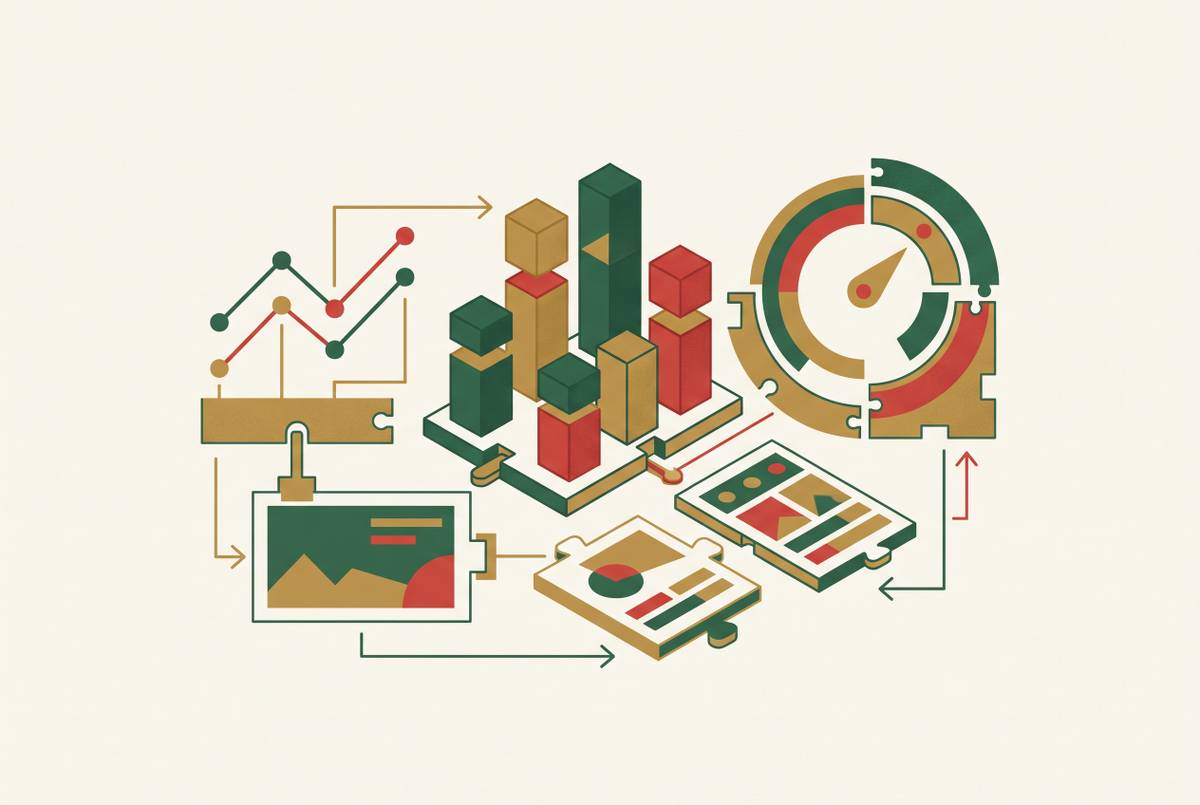
Four report types show up inside AP Classroom, each zooming to a different level of detail. Progress Check results sit at the unit level and work as the main diagnostic tool teachers lean on. Progress Checks function as the dashboard of the whole platform: they report on how students performed on specific units or topics, and the class report calls out the top one or two skills that gave students the most trouble.
Two platform changes matter for how this data gets used day to day. As of November 2025, College Board removed all restrictions on printing multiple-choice progress checks, so teachers can print any assessment they need, which matters in classrooms where device access isn't reliable. Then in January 2026, teachers gained the ability to write new free-response questions using College Board's own rubrics, so a teacher-built FRQ now scores against the same standards as the real exam. That second change improves the quality of in-year signal considerably, and it comes up again later in this guide.
The report data runs in a hierarchy, from unit, down to skill, down to question. That hierarchy is the spine of the whole reading process, and every section below builds on it.
Reading the class-level summary: what the unit and skill breakdown tells you first
Start at the top of the hierarchy. The class-level summary is the first screen a teacher should look at after a Progress Check closes, and it answers one question before any other: which skills and units need reteaching before the class moves on.
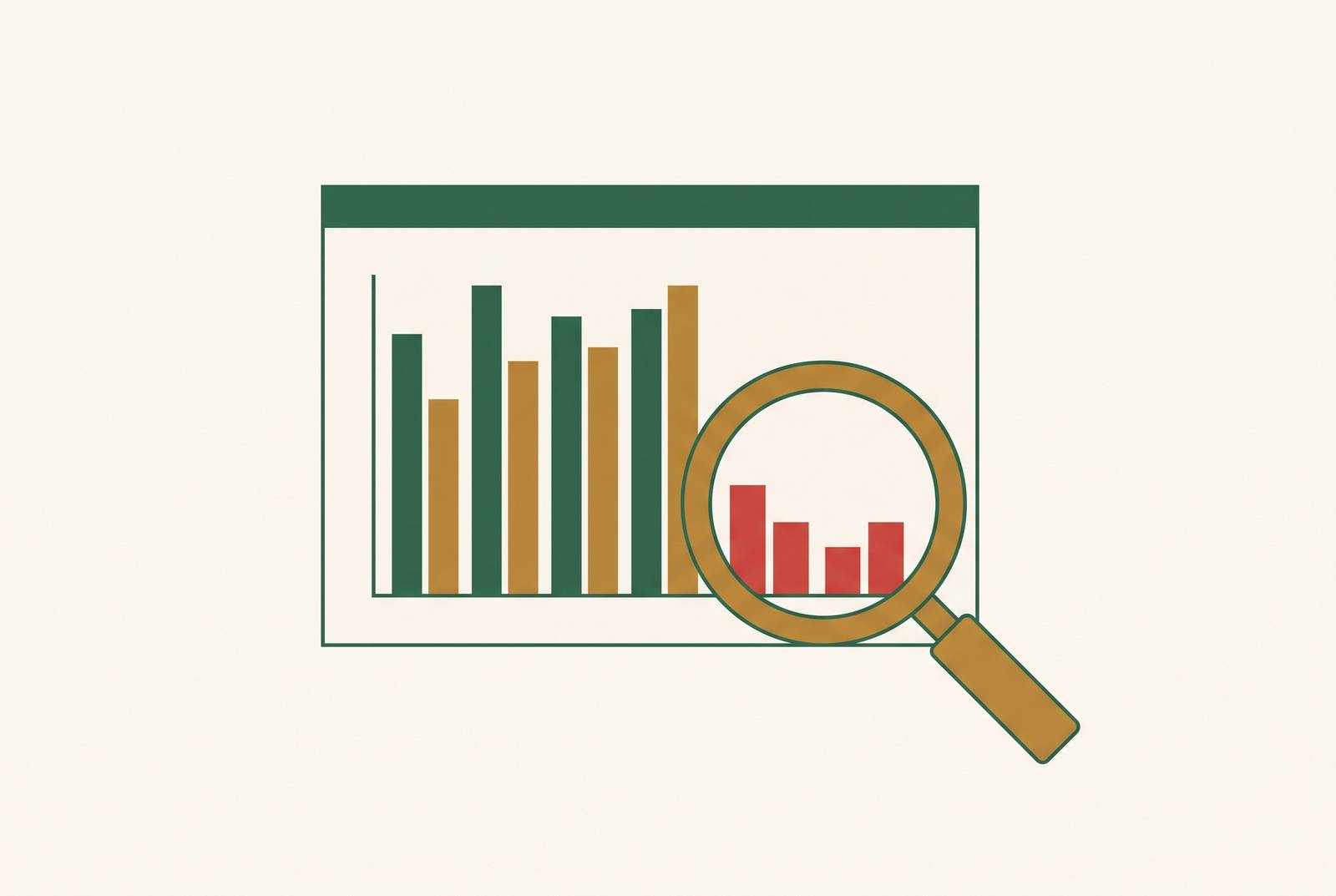
The class report flags the top one or two skills students struggled with most, and that flag, not the overall class average, is the first thing to act on. Two students bombing argumentation and twenty-six doing fine will drag an average down just enough to look like a soft dip, when really there's a sharp, narrow gap producing that dip.
Those skills aren't vague categories College Board made up for the sake of having categories. They map directly onto the skill definitions in the AP curriculum framework for each course. In AP History courses, for example, the flagged skills appear as argumentation, contextualization, or claims and evidence in sources. A skill gap on the report means something specific: students are struggling with a particular kind of thinking, not just a particular topic they haven't memorized yet. A skill gap, like weak contextualization, needs practice in the actual move of placing a document or event in its broader historical setting, beyond a re-read of the chapter.
The unit breakdown does separate work. If a class handles Units 1 and 2 fine and then drops off on Unit 3, the problem almost certainly lives inside Unit 3's specific content or skill demands. Either way, the unit breakdown tells a teacher where to look, and the skill breakdown tells them what they'll find once they get there.
Put those two together and a practical reading sequence falls out on its own. Check the skill breakdown first and note which AP skill categories are flagged. Then cross-reference against the unit breakdown to see which units those flagged skills cluster in. Only after that does it make sense to drill down into individual questions.
That misread matters because a low class average on a unit is evidence of a gap at a specific point, and gaps have causes that go well beyond how the unit was taught, a point this guide returns to directly near the end.
Moving to question-level data: identifying exactly where understanding breaks down
Once the skill and unit breakdown has pointed to a likely problem area, question-level data turns that general direction into something precise enough to actually teach against.
On multiple-choice questions, the report doesn't just show which questions a majority of students missed. It shows which wrong answer they picked. If most of a class picks the same distractor on an AP Statistics question, and that distractor reflects a specific misconception, say, confusing correlation with causation, then that misconception is the reteaching target rather than the general topic of statistical reasoning. Reteaching "data analysis" to a class that's actually confusing correlation with causation wastes time on ground they already understand while leaving the actual error untouched.
A class-wide pattern concentrated on one question carries more instructional weight than a broad skill weakness spread thin across many questions. A skill flagged as weak across a whole unit might be the sum of several smaller, separate issues, and question-level data is what separates those out.
Free-response questions need a different kind of read, and this is exactly where the January 2026 rubric update changes what's possible. Because teachers can now author FRQs using actual College Board rubrics, the report can show which specific rubric elements the class missed, rather than just handing back a low average FRQ score with no further detail. Only rubric-element data tells them apart.
The practical instruction here splits cleanly by format. Multiple low scores clustering on the same topic flag a gap that needs targeted practice, and the format split, multiple-choice versus free-response, tells a teacher what kind of remediation to build, since the two formats fail for different reasons and get fixed in different ways.
Distinguishing a class-wide gap from individual student variation
Not every pattern sitting in the question-level data is a class-wide gap.
A genuine class-wide gap has a identifiable signature: most of the class, not a small cluster, missed the same questions, landed on the same wrong distractor, or failed to hit the same rubric elements.
The skill breakdown actually makes this call easier than it sounds. If the top flagged skill shows weakness spread across nearly the whole class, that's a clean reteaching signal. If individual scores on that same skill vary widely, the class average is quietly masking a split that needs two different responses, not one.
That split has a practical answer built into the platform already. Topic questions, which are shorter and more focused than a full Progress Check, let a teacher assign just the questions tied to the one concept a specific student is missing. That makes differentiated follow-up possible once a class-wide gap is identified, so teachers can route only the students who need it instead of running every student through the same reteach.
If the majority of the class missed a question or failed to hit a rubric element, treat it as a whole-class issue and reteach it to everyone. If it's closer to a quarter or fewer, route just those students to targeted topic questions instead.
One objection deserves a direct answer here, because it's a fair one. In a heterogeneous class, even a pattern that looks class-wide might actually reflect the students who entered the course with weaker preparation dragging the pattern into view. Reteaching the concept as if it's brand new to the whole room risks boring the students who already have it, while still leaving the students who needed a prerequisite skill, not just a repeat lesson, without the specific support they actually need. The fix is to pair the class-wide reteach with a quick check on which students actually needed it, using the same topic-question tool, so the whole-class lesson and the individual routing happen together instead of one standing in for the other.
Using Progress Check timing and frequency to make gap detection continuous, not episodic
A report read two weeks after the unit ended has already lost most of its value. Progress Check data only pays off instructionally if it's read close enough to the actual teaching to allow reteaching before the class moves on to the next unit.
That sets a clear window for when to assign a Progress Check: at the end of a unit, or right before a review session, not after the class has already shifted its attention forward. The guidance behind AP Classroom's design reflects this directly: class reports surface the top flagged skills so teachers can reteach before moving forward, and that single word, before, carries the entire timing logic of the system.
For a teacher juggling multiple sections of the same course, timing gets more complicated, not less.
The lock and unlock controls inside AP Classroom do more diagnostic work than they get credit for. Holding the answer key back until after the teacher has reviewed class results, rather than releasing it the moment a student submits, keeps the diagnostic value of the check intact. The think-aloud moment that actually reveals a misconception only works if the student hasn't already been handed the fix.
Frequency is its own lever, separate from timing. A single Progress Check per unit produces exactly one data point for that unit, which is useful but coarse. Supplementing that with shorter topic question sets between units produces a finer-grained signal earlier, catching a partial gap while it's still small instead of waiting for it to compound across several weeks of instruction.
Multiple-choice data is fast to read this way. Manually grading a full class set of FRQs takes real time, and when feedback comes back two or three weeks late, after students have already written their next essay carrying the same problems forward, the entire point of catching the gap early is lost. That lag is the specific problem the next section addresses.
Closing the FRQ feedback gap with AI grading tools
The dashboard makes multiple-choice gaps visible as soon as a Progress Check closes, but free-response gaps are only as detectable as the feedback cycle that reveals them, and manual grading alone can't keep that cycle fast at full class scale.
The bottleneck here is well documented among teachers who grade AP FRQs by hand: a single response takes a meaningful chunk of time to score properly, and multiplied across a full roster, that pushes feedback days or weeks past the point where it could still shape the next assignment.
AI grading tools built specifically for AP FRQs are starting to close that gap. CS++ grades a class of 30 AP Computer Science A or AP Computer Science Principles free-response responses in minutes, scoring against the 2025-26 College Board CED rubric, with every score fully editable by the teacher afterward.
The January 2026 rubric-authoring update feeds directly into this workflow. Because teachers can now build FRQs using actual College Board rubrics, those teacher-created questions can run through rubric-aligned AI grading with confidence that the rubric itself matches the official standard, not some approximation of it.
The strongest pushback against any of this is a fair one: AI grading isn't the same thing as human grading. A study comparing human and AI scoring of introductory sociology essays found no agreement between instructors and the AI, with the AI consistently grading more leniently. That's a real limitation, and it shouldn't be waved away.
The research consensus treats AI grading as a first pass that still needs a teacher's review. What disappears is the clerical hours spent applying the same rubric criteria to response after response from a blank slate, while the teacher's judgment remains.
The same design logic, fast rubric-aligned feedback with the teacher still in control, extends past FRQs into the rest of AP practice. Grading tools built on this principle aim to surface where student thinking actually breaks down across question types, giving a fuller picture than simply flagging which answers came back wrong. That's the same gap-detection argument this whole guide has been making, just applied to the feedback loop itself instead of to the report alone.
The limits of reading AP Classroom reports for gap detection
AP Classroom reports work as powerful diagnostic tools for exactly one purpose: showing class-wide instructional gaps. Pushed past that purpose, into conclusions the data was never built to support, they stop being useful and start being misleading.
The biggest misuse is treating AP score data as a verdict on teacher effectiveness. One source on AP score analysis puts this bluntly: those scores belong to former students, not to the teacher who taught them. Using them to evaluate a teacher creates pressure to teach toward the test and toward lower-order thinking, instead of toward the kind of genuine understanding the course is actually supposed to build.
Drawing valid conclusions about where students actually stand takes more context than any single report hands over. Prior PSAT or PreACT scores, earlier SAT or ACT results, previous AP scores, attendance records, and whatever extenuating circumstances a given class or student carried through the year all shape how a class-level result should be read. A report showing a weak unit result says nothing on its own about why that result happened.
There's a structural limit too: comparing class results across schools or districts with different socioeconomic conditions, using the same AP score as the measuring stick, isn't a fair comparison. The starting line students run from does not.
None of that argues against using the reports. It argues for reading them for what they show: where, specifically, inside a specific unit, a specific skill, or a specific question, a class's understanding broke down, so that reteaching lands on the actual gap instead of somewhere nearby.