Managing AP Exam Prep Across Multiple Sections With Different Pacing
Students need separate prep plans for each AP course, not one unified schedule.
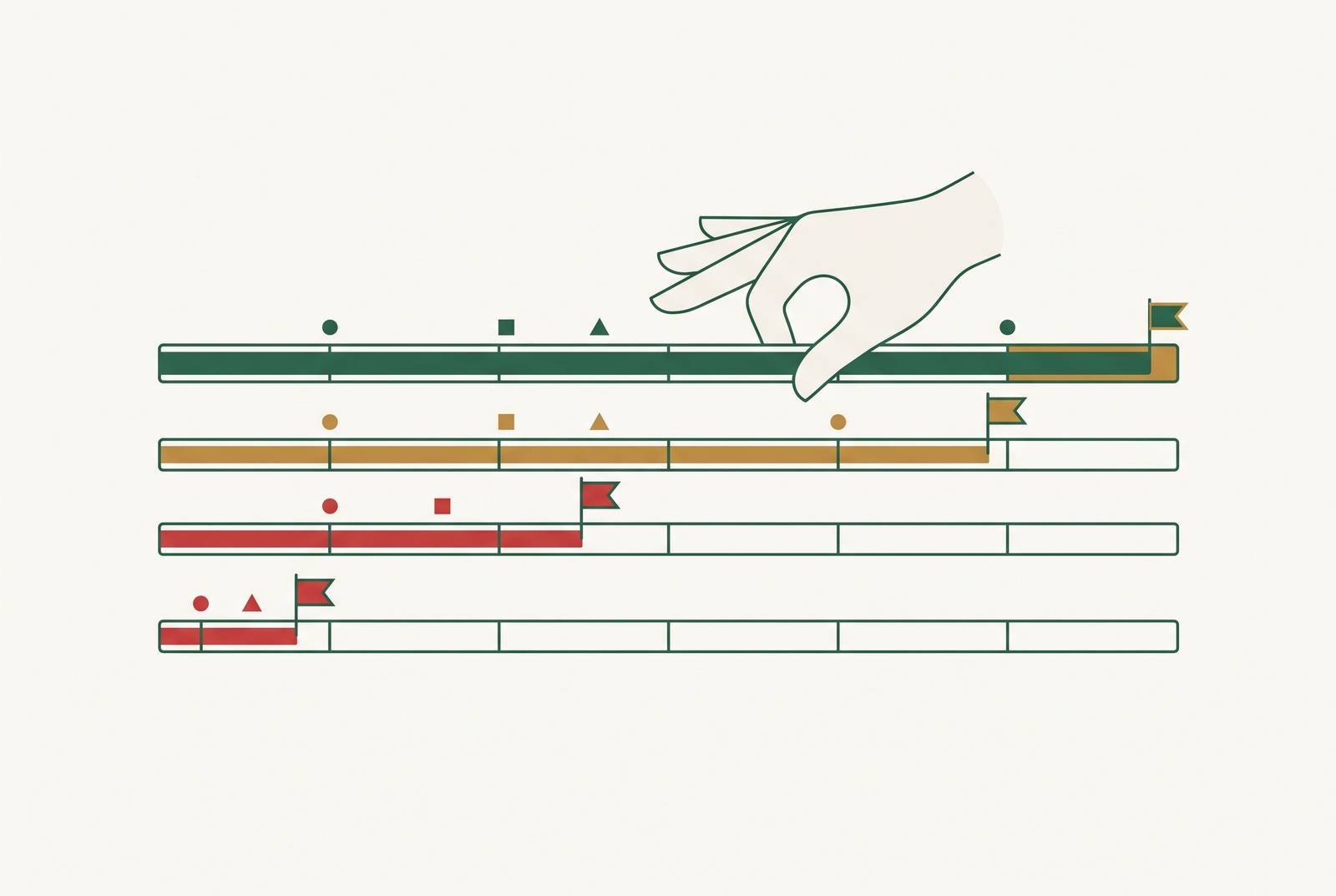
Over 1.3 million students took more than 4.8 million AP Exams in public high schools in 2025, and that number grew 7% from the year before. Every one of those exams, no matter which course it belongs to, converges on the same May exam window. That single fact creates a scheduling problem most students never name out loud: a kid in four AP courses isn't running one prep plan. She's running four, each moving at its own speed, all crashing into the same deadline at once.
Unequal pressure across subjects taught at different speeds under the May exam window
Teachers don't move at the same pace, even when they're teaching the exact same course. One section of AP Biology might be two weeks ahead of another, just because of snow days, a testing conflict, or the accident of which period a class meets. One documented case from Edutopia lays out the math bluntly: a teacher counted roughly 109 viable teaching days out of 180 on the calendar, with 97 full-length class periods spread across about 22 teaching weeks. His 12th-grade students ran on an entirely separate clock, thanks to graduation deadlines and university application timelines.
A good pacing guide is supposed to flex. That's the whole point of building one. But flexibility that helps a teacher manage a messy calendar can leave a student with no clear sense of where she actually stands. The pace of the class and the pace of a student's own readiness are two different things. The exam doesn't know Unit 3 ran three weeks behind. It doesn't care.
So the first mental shift a student needs to make isn't about working harder. It's about realizing that "keeping up with class" and "being ready for May" are not the same goal, and treating them as one is where a lot of prep plans quietly fall apart.
Format changes in 2026 that affect how students need to prepare, not just what they need to know
A wrinkle here has nothing to do with content and everything to do with mechanics. In 2026, 28 AP exams run on Bluebook. In 2026, 28 AP exams run on Bluebook, and sixteen of those are fully digital, so every response gets typed. Twelve are hybrid: multiple choice on screen, free response written by hand in a paper booklet.
Switching between a screen and a paper booklet mid-exam asks the brain to shift gears in a way that a purely digital or purely paper test never does, which can hurt a student who only ever practiced on one format. Switching between a screen and a paper booklet mid-exam asks the brain to shift gears in a way that a purely digital or purely paper test never does. A student who only ever practiced on paper, or only ever practiced on a screen, is walking into a rhythm she's never actually rehearsed.
Then there's the answer-choice change. AP English Language and AP English Literature now both use four answer choices on multiple choice, down from five. That sounds small. It isn't. Students who trained on older materials built their elimination strategy around five options, and that muscle memory doesn't just carry over cleanly to four. It needs to be recalibrated on purpose, not discovered on test day.
The Desmos graphing calculator is now built directly into a digital exam-delivery platform for every exam that allows a calculator. The web version and the phone app are not permitted during the exam. A student who's been practicing on the version she has saved on her phone needs to spend real time in the Bluebook-embedded version before May, because an unfamiliar interface under time pressure is its own kind of gap.
The limits of AP Classroom for students tracking readiness across multiple courses
AP Classroom is in use at more than 22,000 schools, and it's the main official hub connecting students and teachers to course materials, practice questions, and performance data all year long. It does a genuinely good job at what it's built for.
Teachers can assign progress checks on their own timeline, matched to wherever their specific section actually is. The performance dashboard breaks results down by topic, skill, and unit, viewable by class or by individual student, filterable by date range. When the dashboard flags a weak spot, teachers can assign specific AP Daily videos to target it, and they control when answers unlock. The platform has also gotten sharper recently: as of January 2026, official scoring rubrics are available when teachers build their own free response questions, so homemade FRQs line up more closely with real scoring standards. Printing restrictions on multiple choice progress checks were also updated in that period. FRQ scoring navigation got an upgrade in October 2025.
All of that is real and useful. But notice what it's organized around: one course, one section, one dashboard. It has no idea what's happening in a student's other three AP classes. A student's view of her own readiness in Biology is only as fresh as the last progress check her teacher happened to assign. A stale teacher schedule produces a stale dashboard, through no fault of the student's own. And when a question comes back wrong, the explanation tends to be brief. It tells a student what she missed. It doesn't tell her why she missed it, or what to actually do about it next.
That gap, the space between four separate dashboards and one clear picture of where a student stands across all of them, is exactly the problem this article is trying to solve. AP Classroom is not built to close it. A student has to build the bridge herself.
Building a personal readiness map across subjects before committing to a study schedule
Progress check scores are a warning light on a dashboard. They tell you something's wrong. They don't tell you what's wrong or what to do about it. Reading that light correctly is the actual skill.
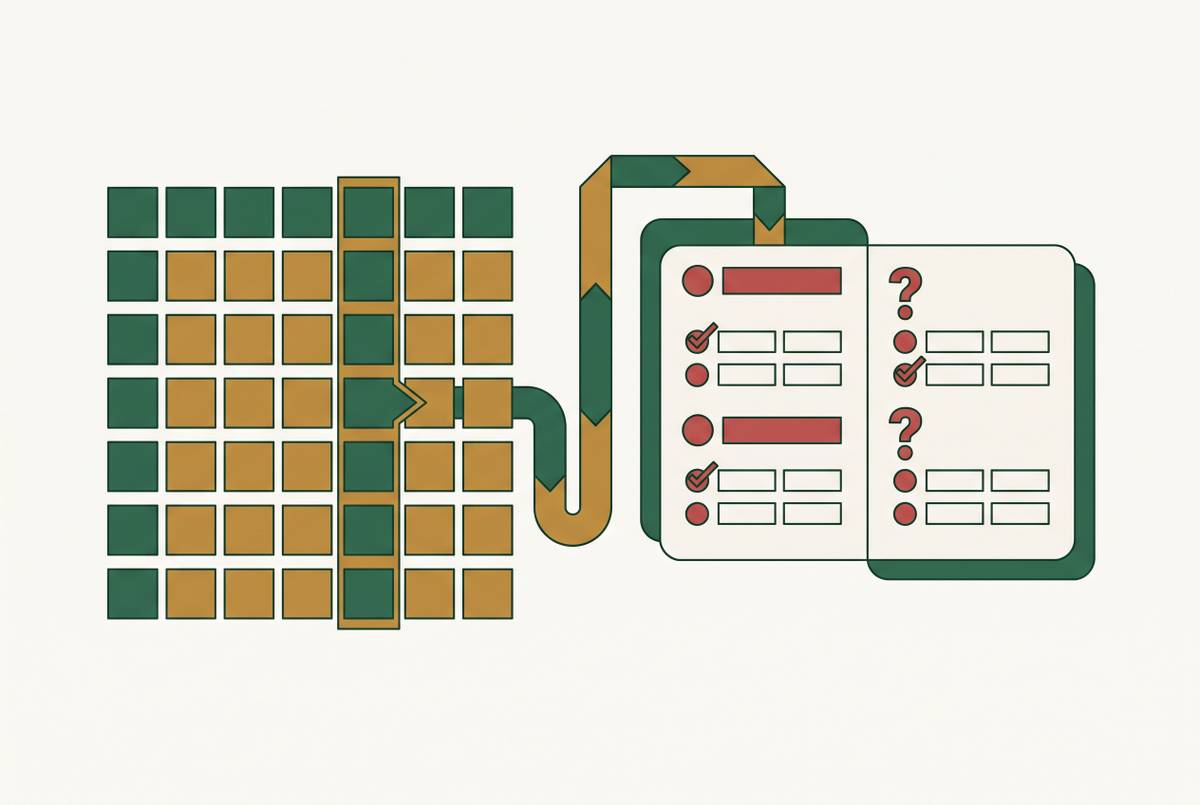
Step one: figure out where each class actually is, not where the syllabus says it should be. For every AP course, ask three questions: What's been fully covered? What's been introduced but never really reinforced? What's still ahead? Then check that against the full scope of the exam, using AP Classroom, the official course and exam description, and released practice materials. Those documents show the whole map. Class progress only shows how much of the map has been walked so far.
**Step two: separate "covered in class" from "actually understood."Progress check scores, graded FRQs, and unit tests are the raw data here, and the pattern across questions determines which fix applies, since a middling score built from several separate small mix-ups calls for a different response than the same score caused by one conceptual hole repeated across five questions. A middling score on a unit test could mean five different small mix-ups, or one big conceptual hole appearing in five separate questions. Those require completely different fixes. Did she understand this, or did she just memorize it long enough to survive the test? That distinction is invisible in a single number, and it's the exact thing AI systems built around concept-mapping try to detect at scale, tracing which specific prerequisite gap is quietly blocking everything downstream from it. A student can do a rougher version of that same diagnosis by hand, just by looking honestly at where mistakes cluster.
Step three: build a simple priority matrix. Two axes. First: how much class time is left before the exam. Second: how solid is current mastery of what's already been taught. A subject that's running low on classroom time and shaky on what's already covered is the highest priority on the list, because that gap is not going to close itself in class. A subject with strong mastery and plenty of time left can survive on light maintenance. Everything else sits somewhere between those two ends.
Allocating study time across subjects as the year progresses and gaps shift
Study time should follow the size of the gap, not the order of the syllabus. A class that's moving slowly through dense material deserves more independent attention, not less, even if it feels premature to a student mid-unit.
The year breaks into three phases, and each one calls for a different allocation logic.
September through December is the foundation phase. This isn't intensive exam prep yet. It's making sure the concepts being taught right now are actually sticking, because a gap that forms in October doesn't stay small. It compounds, and by March it's twice the problem it would have been.
January through March is the diagnostic phase. Run practice checks across every subject and use the results to re-rank the priority list built earlier in the year. If a class's classroom pace is falling behind the exam's actual scope, that subject should start pulling more independent study time in this window, even if the grade in the class still looks fine.
April and May is the convergence phase. By now, every subject needs active attention. But the readiness map built over the earlier months tells a student where to actually spend the limited time left, and it's not always the subject with the most content still to cover. It's the subject with the largest unresolved gap.
One trigger should override the plan at any point in the year: if a progress check or graded FRQ reveals a real surprise in a subject that had been quietly deprioritized, that subject jumps the queue immediately. The plan is a living document, not a contract.
And because no student can study four subjects equally every single day, it helps to make the trade-off explicit rather than leaving it to whatever feels most urgent that morning. Something like 60% of weekly prep time going to the two highest-priority subjects, with the remaining 40% split across the rest, turns an invisible daily decision into a visible weekly one.
The role of AI-powered practice and grading in a multi-subject prep system
Grading is slow, and slow grading is expensive when a student is running four subjects at once. Research shows teachers can spend anywhere from 10 to 15 hours per week on grading tasks alone. For a student waiting on that FRQ feedback across three or four AP courses simultaneously, that lag isn't just annoying. It's lost prep time that never comes back.
A handful of AI grading tools have moved into that gap, and they're not interchangeable:
CoGrader breaks scoring into separate evaluators for thesis, evidence and reasoning, and sophistication, with Canvas and Schoology integration on school and district plans. Its free tier covers 100 student submissions a month, and the standard plan lists at $15/month billed annually. EssayGrader is associated with teachers saving 80% of their grading time and also surfaces patterns across a batch of submissions, which is useful for spotting a conceptual issue appearing across multiple students, not just one. Gradescope, from Turnitin, handles written exams, homework, code, math, and bubble sheets, and its standout feature is grouping similar answers together so one graded response applies to every matching one, rather than regrading the same mistake over and over. The most useful tools in this space aim not just to flag a wrong answer but to diagnose where a student's reasoning actually broke down, and to target the specific gap standing between current performance and a passing score, using AP rubric standards with enough specificity that a student can actually act on it before May.
Does the feedback explain anything, or does it just hand back a number? A score with no explanation doesn't move a student forward. The tools worth using generate feedback specific to the actual submission, on content, argument, organization, and reasoning, with something concrete to try differently next time.
That specificity matters even more for a student juggling subjects, because a rhetorical analysis essay in English Language, a DBQ in History, and an experimental design response in Biology are graded against completely different rubric logic. A generic scorer applying one grading approach across all three is going to be less useful than tools built with subject-specific grading pipelines in mind.
A functional week of multi-subject AP prep in practice
A workable week has three separate parts, each doing a different job.
A short weekly readiness check runs 15 to 20 minutes. Look at progress check results, recently graded work, and any AI feedback that came in that week, across every subject at once. This is the moment allocation gets updated. Skipping this step causes the whole system to drift back toward whatever feels urgent that day.
Deep work blocks, one or two subjects at a time. This is where the real content review, FRQ practice, and feedback review happen, concentrated on whatever the readiness map flagged as highest priority that week. The instinct to spread this time evenly across all four subjects every single day is understandable and almost always wrong. Depth beats spread here.
Maintenance touchpoints for everything else. Short, spaced sessions, flashcards, a quick concept summary, one or two practice questions, just enough to keep a strong subject from sliding backward while attention is elsewhere.
Format familiarization deserves its own slot on the calendar, not a leftover ten minutes. Any exam using Bluebook for the first time, or any exam with a format change this year like the four-answer-choice shift in English Language and Literature, or the hybrid screen-and-paper rhythm, needs a dedicated session where the format itself is the thing being practiced, separate from content.
None of this works if it's treated as a suggestion. A student carrying four AP courses on top of everything else has a fixed, limited amount of prep time, and a plan that says "work on everything equally every day" isn't a plan. It's a wish. The whole point of the weekly structure is to force a choice about where attention goes, instead of letting the loudest deadline make that choice by default.
The same logic holds on the teacher side, for anyone managing multiple sections moving at different speeds. The section furthest ahead in the syllabus isn't automatically the one that needs the least help. The section with the biggest gaps in what's already been covered is the one that needs the extra time, and those are two different questions.
Adjusting the system in the final six weeks when all subjects demand attention simultaneously
By April, the luxury of sequencing is gone. Every subject wants attention at the same time, and the readiness map that felt like a planning exercise in October becomes the only thing standing between a student and pure panic.
This is where the priority matrix earns its keep. The final six weeks aren't for treating every subject equally, and they're not for chasing whichever class has the most content left to cover. They're for going straight at the largest unresolved gaps identified back in the diagnostic phase, because those are the ones classroom time was never going to close on its own.
The weekly rhythm from earlier in the year doesn't need to be reinvented here. It needs to tighten. The readiness check might happen more than once a week now. Deep work blocks might need to rotate through more subjects, but still not all of them, every day, at equal depth. Maintenance touchpoints for the strongest subjects can shrink further, freeing up time for whatever the data says still needs it.
What shouldn't change is the underlying discipline: let the actual readiness signal, not the calendar and not anxiety, decide where the next hour goes. A student who spent the fall and winter building an honest map of her own gaps walks into May with a plan. A student who spent that same stretch assuming more hours would sort it out walks in with a to-do list and four exams that all showed up on the same two weeks, whether she was ready or not.