Low-Stakes Practice Test Protocols That Produce Actionable Data
Diagnostic protocols turn practice test data into targeted study plans.
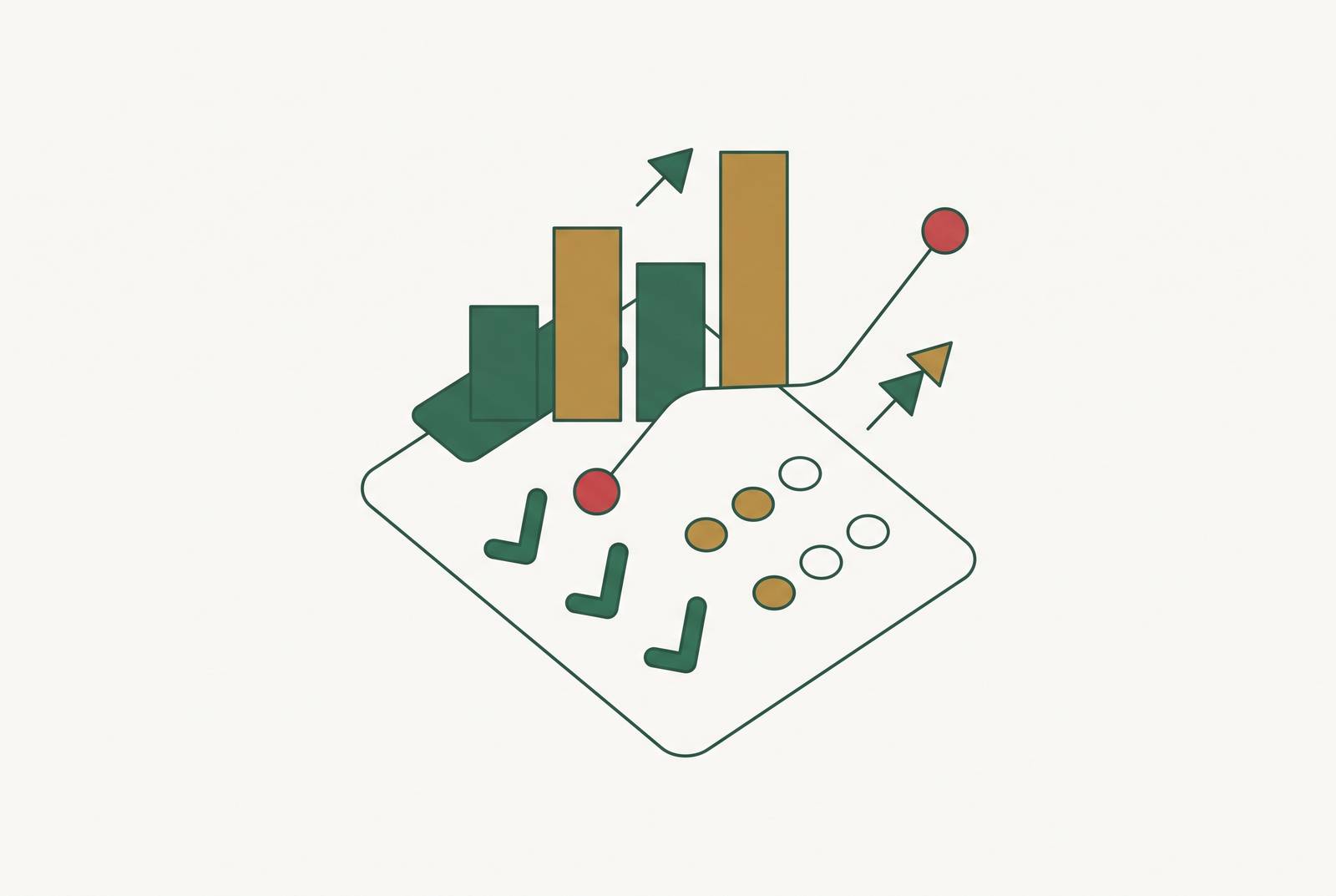
Low-stakes practice tests produce actionable data only when the protocol is built for diagnosis. That means designing the timing, stakes, feedback, and response analysis together. The goal is a clear account of where learning breaks down and what the next study session should address.
Why practice tests fail to produce actionable data by default
A student finishes a practice test, sees a score, and has no clearer idea what to do next. A teacher can face the same problem with a whole class of results. The test has measured something, but the score has not explained it. Taking another test may give the student another number without making it any easier to decide what to do next. “More practice tests = better data” is an appealing equation with a missing term.
That term is the protocol around the test. Testing as a grading event and testing as a data-collection protocol are different activities, even when the questions are identical. Grading produces a judgment of performance, while diagnosis must locate a breakdown that can guide study. Low stakes help by reducing anxiety and making performance a more authentic signal of knowledge. But a cleaner signal still needs interpretation, or the result is a thermometer with no treatment plan.
What the research says low-stakes assessment actually does to learning
Retrieval practice gives testing a role beyond measurement. Attempting an answer can support retention, and feedback can turn that attempt into a correction. Low-stakes quizzing can also improve students’ understanding of what they know, which helps them direct later study. The useful causal chain runs from an attempt, through correction, to a better-informed next attempt.
Conditions for Effective Learning Without Upfront Instruction found that practice with either correct-answer feedback or explanatory feedback outperformed lecture for memory. The same study found that generalization required explanations and enough prior knowledge to benefit from them. That distinction matters because remembering an answer and applying an idea are not interchangeable achievements. A protocol needs feedback suited to the learning it expects to produce.
Timing matters for the same reason. Spaced practice consistently outperforms massed practice for retention, so one end-of-unit test cannot do the work of distributed checks. Those checks give students more chances to retrieve what they know, correct errors, and think again. Specific feedback does take time to produce, which is a real constraint. AI-assisted grading can help with that workload, but only within a protocol that includes human oversight.
How stakes level shapes the performance signal you actually get
Before choosing a feedback system, the designer has to make participation meaningful without turning the diagnostic into a threat. High stakes can make performance reflect anxiety as well as knowledge. Lowering the consequences reduces that distortion and gives the test a better chance of revealing what the student actually understands. But lowering consequences all the way to nothing creates a different problem. A student who disengages is not supplying a useful knowledge signal either.
A class can be told that a test does not count or that it earns a small completion grade and will guide next week’s instruction. The first message removes consequences without establishing a reason to participate. The second gives participation a purpose while keeping errors inexpensive. Low stakes should make mistakes safe enough to reveal while keeping participation meaningful.
Practical calibration therefore combines a small grade weight or completion credit with explicit diagnostic framing. Keeping scores out of public comparisons stops the test from becoming another way to rank students. Students need to know that the result will help determine what comes next.
Why feedback design determines whether the data becomes learning
Once students make a serious attempt, feedback has to turn the result into something they can use. Testing without feedback can still produce meaningful learning benefits, so it would be wrong to call it useless. It does not reliably tell students where their thinking failed or what to change. A wrong-answer flag records an outcome. Diagnostic feedback explains the breakdown.
“Incorrect” offers no study direction, while “you confused correlation with causation in the conclusion step” names both the concept and the point of failure. That makes the response useful beyond the single question. It also changes the task from remembering the correct answer to repairing the reasoning that produced the wrong one. An answer key can close a question without closing a gap.
For feedback to do that work, timing, granularity, and actionability must hold together. Feedback close to the attempt helps students connect the correction to their thinking. Feedback at the skill or concept level identifies what needs study. A specific next step then connects that diagnosis to further practice. “Re-read the material” is not much of a plan when the problem is a particular inference.
How to sequence practice tests across a study arc rather than clustering them
Useful feedback from one test still leaves a question about whether the error is persistent. Tests spread over time give more evidence to answer it and also help students retain what they learn. A meta-analysis of nine STEM courses found a 2–3 percentage point average benefit of spacing. When tests are clustered at the end, much of that chance to find gaps is lost because there is little time left to study. A warning light is less helpful when it comes on in the car park after the journey.
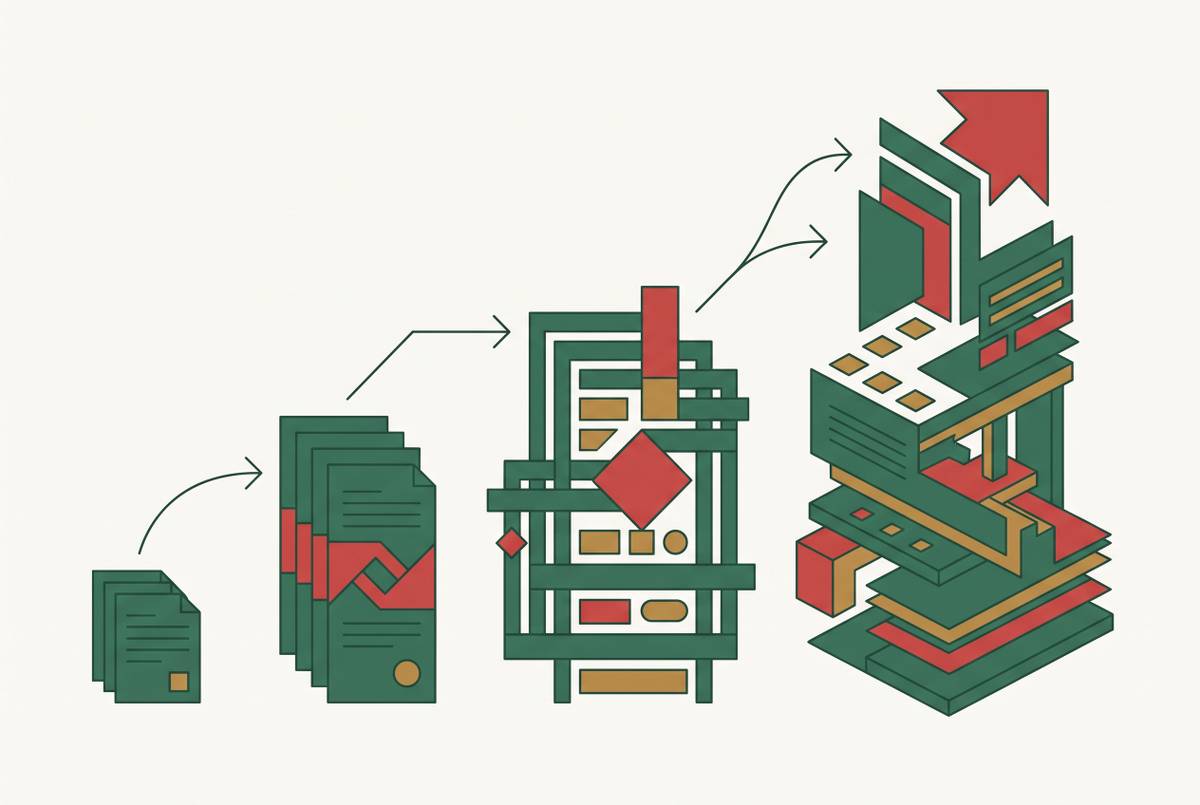
For AP prep, the early phase begins with a full diagnostic or a section-based diagnostic. Its job is to establish a baseline and locate possible gaps. In the middle phase, regular timed section tests show more about those gaps and how they relate to time pressure, question type, and misreading. In the late phase, full-length practice exams test whether the gaps have closed while simulating the complete test-day experience. Each phase answers a different question, so replacing the sequence with repeated full mocks loses useful distinctions.
The distribution of content matters within that sequence. For AP Computer Science A, more study time should go to higher-weight units, which does not mean those units must come first. Diagnostic attention should go where the exam concentrates points. Focused diagnostics based on a statistical assessment model can also provide a shorter entry point to each phase. They make repeated gap checks more feasible without requiring a full-length test every time.
How to read practice test results as pattern data rather than scores
Sequencing creates evidence, but analysis has to turn it into a study decision. The output should be a gap map, a running record of confirmed gaps by category. Early diagnostic results supply provisional entries, which later sessions can support or revise. A single missed item is a hypothesis. Repeated errors on the same concept across three sessions offer much firmer ground.
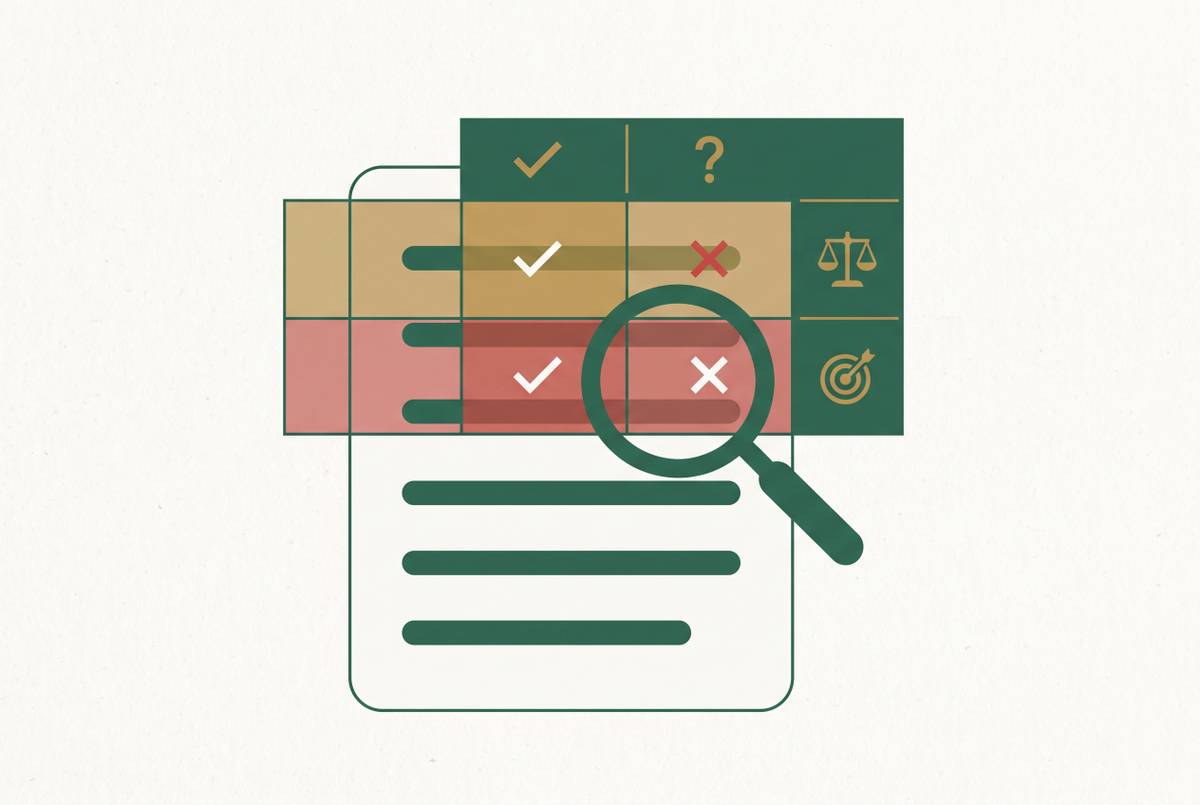
A useful gap map distinguishes content gaps, process gaps, and condition gaps. Content gaps are visible when a student keeps making errors on the same concept, unit, or skill cluster in different question formats. Process gaps appear in multi-step or inference questions even when the foundational knowledge is intact. Condition gaps occur when work is timed and disappear when it is untimed. Those distinctions prevent every wrong answer from being treated as a request to study more content.
The comparison between timed and untimed work is especially important. Repeated errors under time pressure attach a condition to the pattern, but untimed work helps establish whether the underlying knowledge is also weak. Otherwise, the protocol can prescribe content study for a time-management problem. Across a class, AI-assisted analysis can help detect recurring misconceptions and error patterns faster than manual review at scale. Its diagnostic value lies in connecting responses.
Why lower-achieving students need structured protocols, not just access to practice tests
Even a sound way to analyze results fails if it depends entirely on students choosing to use it. Jakob Schwerter, Fani Lauermann, Taiga Brahm, and Kou Murayama’s October 2025 study examined 325 undergraduates in a gateway mathematics course. It found that students with lower prior achievement were less likely to test themselves and needed more practice testing attempts to achieve similar exam performance improvements. An access-only design therefore leaves the amount of practice least dependable where repeated attempts are especially important.
From the designer’s perspective, that is a structural problem. A voluntary system makes participation depend on motivation and self-regulation before it can offer the benefits meant to support learning. Adding more tests to choose from still leaves practice up to the students. If a protocol relies on voluntary self-testing, it favors students already more likely to engage.
Teacher-assigned tests embedded in the course or program calendar make participation part of the design. Motivation-supportive framing explains that the purpose is to help students learn. Together, scheduling and framing address both the participation gap and students’ anxiety. A set plan for analysis after those sessions also makes keeping the gap map up to date part of the work. Access opens the door, but the protocol must carry the diagnostic work through it.
What AI grading makes feasible that wasn't before — and where it still fails
Frequent tests, prompt feedback, and cross-session analysis ask more of a teacher than collecting scores. The TDAA course at HKUST(GZ) demonstrated an operational answer through weekly AI-assisted grading of closed-book tests across a full 13-week semester. People reviewed the AI outputs before students saw them. The important capability was not unattended grading, but sustained feedback with a human review layer.
AI-assisted grading can also detect common misconceptions and recurring gaps across a class set of submissions. That gives teachers a view of shared problems that is difficult to produce manually at speed. Yet scale does not settle whether a particular explanation is accurate or whether a suggested gap is the right one. Faster feedback is only useful if it points study in the right direction. Otherwise, the protocol has industrialized the wrong turn.
With constructed-response work, the protocol must also guard against the risk of bias, including for language learners. If feedback treats a feature of language as evidence of a conceptual error, the gap map can direct study toward a misunderstanding that the response does not establish. Automated judgments can make this error, though its occurrence varies. A person must review AI output before it reaches students as feedback. Automation makes frequency feasible, while oversight protects the interpretation on which the next study decision depends.
What a complete low-stakes protocol looks like assembled end to end
Start by setting the participation terms before the first diagnostic. Use a small grade weight or completion credit, explain how the test will help find gaps, and keep scores out of public comparisons. Then place the baseline, pattern-building sessions, and full-length simulations across the study calendar, with frequency suited to its length. Assign those sessions so that taking them is part of the work. This establishes both who participates and when the evidence will arrive.
Next, align the questions with the actual exam’s skills, concepts, and unit weights. For AP exams, use section-level tests with the same weights as the exam before moving into full-length mocks. For students using digital AP exam formats in Bluebook, use Bluebook-native sessions so they practice in the same environment. The interface is itself a test variable, so environment belongs in the design.
After each attempt, return prompt feedback that names the concept or skill, locates the breakdown, and points toward a specific next step. Where AI assists, review its output before it reaches students. Then compare the response with earlier sessions and classify the evidence as a content, process, or condition gap. Keep isolated errors provisional and update confirmed patterns as later attempts show whether they persist. The next study session should begin with that updated gap map.
Sources
- Differential use and effectiveness of practice testing: Who benefits and who engages? - ScienceDirect
- Test-Driven, AI-Assisted Learning: Replacing Lectures with Weekly Closed-Book Tests
- (PDF) Low-Stakes Quizzes Improve Learning and Reduce Overconfidence in College Students
- Conditions for Effective Learning Without Upfront Instruction: How Practice with Feedback Supports Memory, Generalization, Motivation, and Metacognition
- STUDENTS' SPACING OF THEIR STUDY 1 Do ... - ERIC