Beyond Question Generation What AP Teachers Actually Need From an AI Study Platform
Teachers need AI to grade essays and surface learning gaps, not generate more questions.

An AI study tool for AP classrooms and teachers should do more than generate practice questions. Its real job is to score extended writing, identify gaps in understanding, get those findings to teachers in time, and spare them the work of reconciling separate systems.
Why AP teachers have a pipeline problem, not a question-supply problem
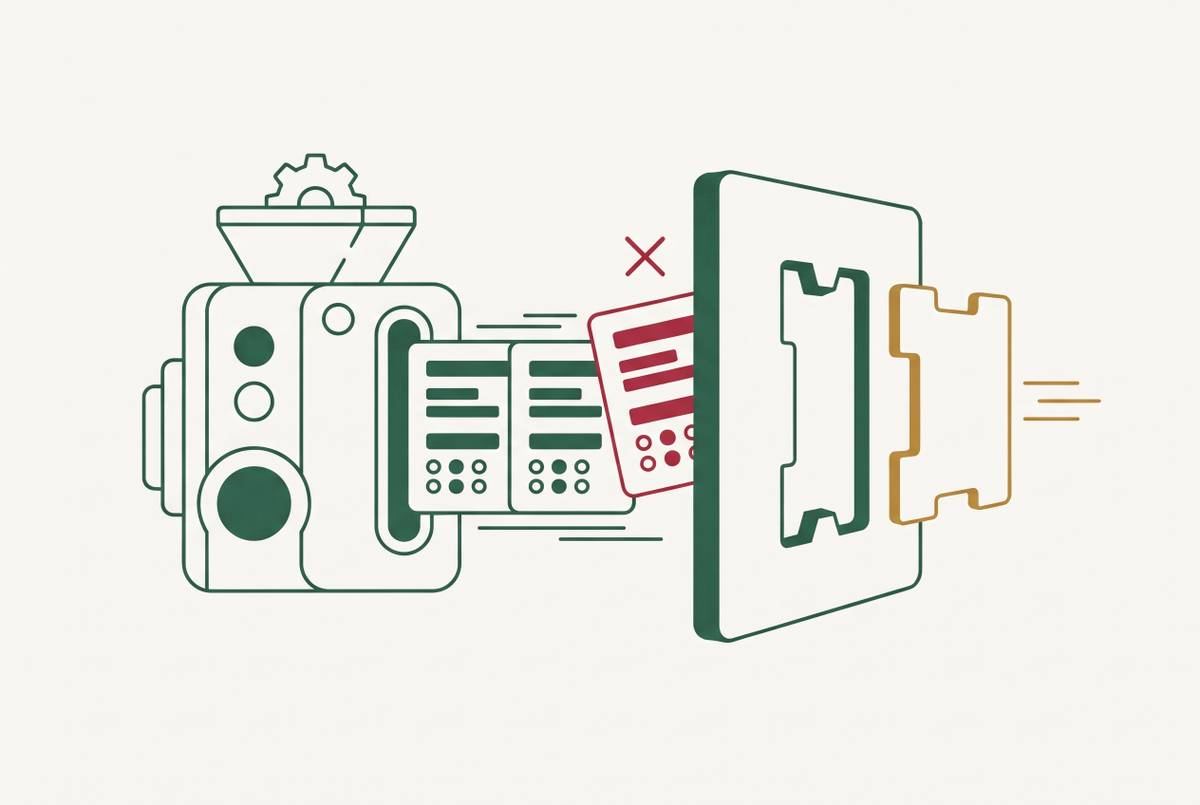
AI for AP prep is often sold on its ability to make questions. Make multiple-choice questions, export them to Google Forms, and call that support for the lesson. Much of the teacher’s work begins when the student submits an answer. Someone still has to read the response, judge its reasoning, work out what went wrong, and decide what the student needs next.
More questions can thus add to the very bottleneck the tool promises to remove. A new essay prompt is welcome until it comes back as another stack of essays. The scarce resource is the teacher’s time and judgment after the answer arrives, especially when written responses reveal problems that a right-or-wrong label cannot explain.
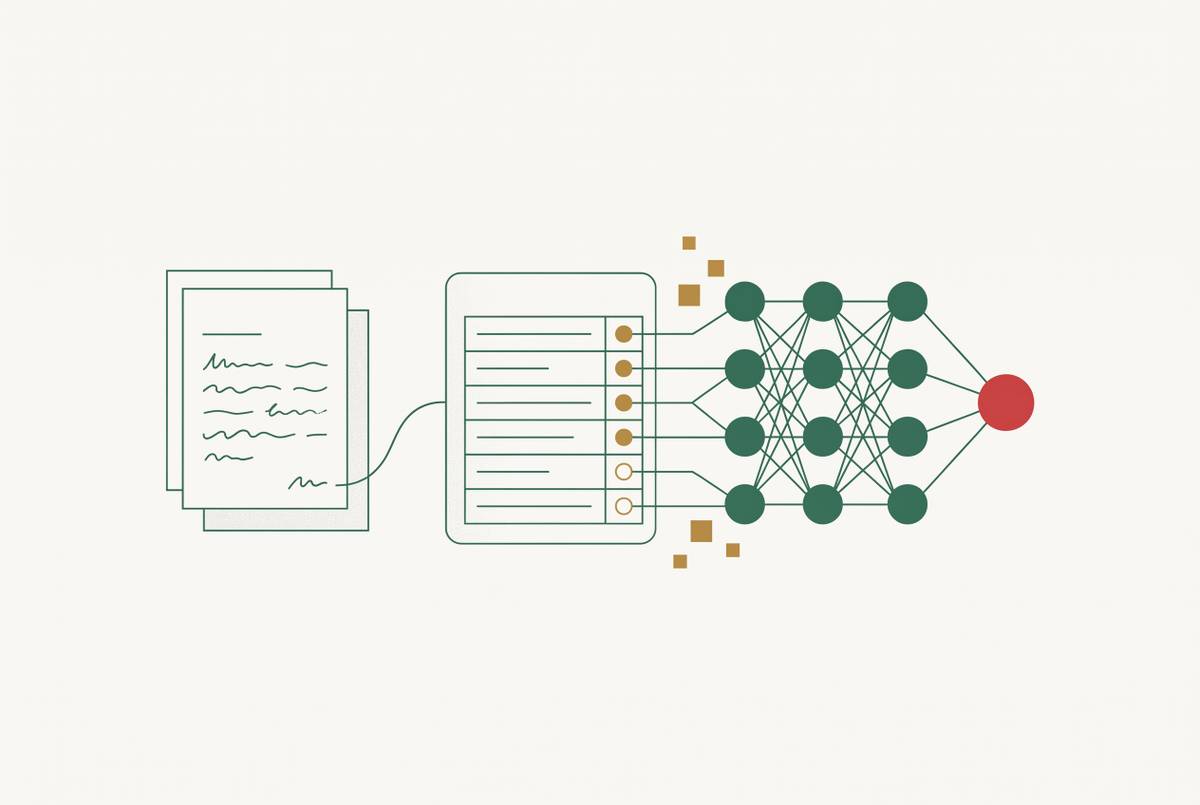
That downstream work has four linked stages. First comes scoring extended writing, followed by identifying where understanding breaks down. The diagnostic then has to reach the teacher while there is still time to act. Finally, those stages must connect without teachers having to export the data, cross-reference it, and sort out differences by hand. This last stage is less glamorous than an AI tutor, but a platform that saves grading time only to spend it on spreadsheet housekeeping has made a rather expensive trade.
Why grading extended writing at classroom scale is the hardest part of AP to automate
AP writing rubrics divide judgment into separate components, including a defensible thesis, evidence and reasoning, and sophistication. A response can succeed on one component without succeeding on another. Generic feedback can blur those distinctions. “Good argument, needs more detail” may sound encouraging, but it does not establish which rubric component the student has earned or what the missing work is.
CoGrader addresses that structure with separate evaluators for each rubric component. An AI’s scoring therefore needs to follow the distinctions the assignment actually tests.
Class Companion names AP, CAASPP, and STAAR preparation as uses for its tool and gives instant AI feedback on extended written responses. Its teacher tier is free, with school pricing available through a demo. EnlightenAI takes a different route through the same problem. EnlightenAI scores work against the teacher’s own rubric and, in teacher-in-the-loop mode, has a person review feedback before students get it. Its alternative immediate-feedback mode sends AI feedback directly to students, and it integrates with Google Classroom, Canvas, and Clever.
Gradescope, now part of Turnitin, addresses another kind of extended response through support for handwritten problem sets and AI-assisted answer grouping for batch grading. That makes it a good fit for STEM work with equations, diagrams, and complex notation. It is not the same task as evaluating an essay’s thesis. The comparison shows why “AI grading” is too broad a category to settle a buying decision.
Across these approaches, the sound role for an AI score is a first pass. Oklahoma’s 2026 law prohibits AI from serving as the primary basis for grading and other high-stakes educational decisions, so practice work that reaches the gradebook can raise legal constraints depending on the state. The practical distinction is important. Automated feedback can shorten the practice loop without replacing the teacher’s judgment on the final grade.
Why a score is not a diagnosis, and what genuine knowledge-gap detection requires
A score describes performance on a task. It does not, by itself, explain the cause. Two students can do poorly on the same unit but need different kinds of help, and a percentage correct cannot tell the teacher which prerequisite each student is missing. A heatmap may make the pattern easier to see. It cannot turn that pattern into an explanation simply by adding red.
Genuine knowledge-gap detection has to distinguish a momentary struggle from a missing piece of understanding. That requires interpretation. In AP Biology’s four Big Ideas or APUSH’s themes, concepts are interdependent, so a gap can cascade into later units. The useful diagnostic identifies where that chain breaks rather than merely marking the latest unsuccessful answer.
But what if AI predicts that a student will struggle and recommends a next step? That can be useful without solving the harder problem. Prediction from past performance identifies a likely difficulty, while diagnosis pinpoints the missing concept behind it. The latter requires an account of the dependencies within the particular AP course. Otherwise, advice on what to do next can arrive at the right time but target the wrong concept.
Quanzhi Fu, Qiyu Wu, and Dan Williams’s 2025 arXiv preprint, “Mining the Gold,” proposed using student–AI chat logs as richer inputs for automated gap detection. SchoolAI illustrates how that kind of information can reach a classroom teacher. It records every student–AI conversation, and its dashboard summarizes what each student knows, where they are stuck, and what interests them.
Educators still have to interpret the output carefully enough to avoid misdirected intervention. This is the dividing line between performance tracking and gap detection. One reports what happened on the task, while the other tries to explain what the student needs to understand before the next task will help.
Why diagnostic data only helps if it reaches teachers before the unit is over
A teacher who learns three weeks after a unit assessment that a student misunderstood AP Macro’s circular flow model has missed the first chance to step in. The information may still describe a real problem, but it no longer supports the same teaching decision. Timing changes its value. A diagnostic that arrives during review can shape reteaching, while a late report risks becoming a record of an opportunity lost.
Wayground addresses this timing problem by delivering the same question set live or student-paced and returning per-student mastery data from both. That turns a review quiz into a same-session diagnostic. SATCoach provides a different benchmark for specificity. Its tutor dashboard tracks how well each student has mastered 30 Digital SAT skills, showing what they struggled with, what clicked, and what to teach next. It illustrates a level of detail AP-focused tools have not universally matched.
Access to that diagnostic layer also varies by plan. MagicSchool gives feedback on the class’s writing on its free plan, but insights into how students learn are on the paid tier. Those are different levels of support. A teacher comparing tools therefore needs to check both whether the product gives feedback and whether the plan on offer turns that feedback into information they can use to teach.
The five-stage review cycle gives this information a destination. Diagnose identifies the gap, build develops the missing understanding, drill provides practice, write tests extended responses, and catch up addresses unfinished learning. In that cycle, scoring helps with write, gap detection helps with diagnose, and findings that arrive in time help guide build and catch up. The cycle also exposes disconnected systems. If a teacher must export several reports, cross-reference them, and sort out their differences before choosing what to teach, the dashboard has moved the bottleneck to that work.
That is why dashboard design is not chiefly a beauty contest. A clear display helps, but the consequential question is how quickly a finding becomes a teaching decision. Freed from repetitive grading, teachers can spend more time supporting students only if the diagnostic does not create a second administrative job. The signal needs to arrive while it can still change the lesson.
Why teacher trust in AI tools is neither stable nor guaranteed to grow
The strongest objection to this whole argument is that faster output creates little benefit when teachers cannot trust it. If every score and recommendation requires extensive checking, the promised savings may disappear. Familiarity does not automatically fix that problem. Michigan Virtual’s 2026 study found that Michigan educators were using AI more even as they trusted it less and placed less weight on integration than in 2025.
Teachers worry about fairness, equity, accuracy, and privacy. For AP work, accuracy also depends on whether a system understands the exact language of a rubric and how parts of a course framework depend on one another. A plausible-sounding explanation is not enough. Teachers need to judge when the system has followed the relevant reasoning and when it has merely produced a confident answer.
Research at LAK 2025 identified a lack of qualitative analysis of LLM reasoning processes in existing research. That leaves a difficult limit on teachers’ ability to predict when an AI will be wrong or why. The problem extends across the review cycle. A mistaken diagnosis can direct practice toward the wrong concept, just as mistaken scoring can send a student back to make the wrong revisions to an essay.
Privacy adds a separate reason for scrutiny. EssayGrader states that student submissions are never used to train AI models, while GradingPal’s security page qualifies its prohibition with “without explicit written consent.” A statement about data use is useful information, but it is not the same kind of assurance as an external assessment.
Trust therefore depends on design choices that give teachers control over consequential decisions. EnlightenAI’s teacher-in-the-loop mode makes review structural within that workflow, before feedback reaches students. Its immediate-feedback alternative shows why the mode is part of the evaluation. Dan Fitzpatrick’s rule captures the boundary neatly, “outsource the doing, not the thinking.” Sequencing, feedback judgment, and assessment design remain with the teacher because those decisions determine what the automated work is for.
What is the best AI study platform for AP teachers who want more than practice questions?
The available tools solve different parts of the problem rather than offering interchangeable versions of the same service. Wayground supports retrieval and mastery data, Class Companion provides extended writing feedback, and SchoolAI surfaces conversation-level diagnostics. These distinctions are more useful than a single winner’s badge. Each identifies the kind of work a tool is built to absorb.
No single tool in the landscape described here covers the full review cycle. Assembling several tools can broaden coverage, but it also introduces a cost that subscription prices do not capture. The teacher must connect the findings. When scoring lives in one system and concept-level evidence in another, any manual reconciliation belongs in the calculation of time saved.
A platform built around the whole pipeline would make practice problems and AI-powered grading the foundation. Above that foundation, it would need to establish what each student understands, locate the break in their thinking, and bring that finding into the next teaching decision. That is a demanding standard. Personalization requires the next step to respond to the student’s actual gap.
The four pipeline stages also have to work together under teacher oversight. Even a correct score leaves the cause unclear without a diagnosis, and a good diagnosis that arrives late misses the chance to help in time. Fast reporting without connected workflows hands the teacher another reconciliation task.
The best AI study platform for an AP classroom is therefore the one whose strengths match the classroom’s downstream work, with clear limits on what still requires teacher judgment. More content alone cannot meet that test.
Sources
- Detecting Knowledge Gaps from Conversational AI Interactions Using Curriculum Prerequisite Graphs
- AI-Based Knowledge Gap Detection System for Student Performance Analysis Using Predictive Analytical Models
- Surfacing Isolated Learners with Outcome-Independent Mediation of Feedback between Teachers and Students Using AI
- Mind the Trust Gap: Identifying (Mis)alignments in Teacher-Student Views Toward Control and Agency in K-12 Classroom AI
- AI in Education: A 2026 Snapshot of Growing Use and the Shift Toward Integration
- From Co-Design to Metacognitive Laziness: Evaluating Generative AI in Vocational Education