Why Generic AI Question Generators Fail College Board Alignment Tests
Generic generators ignore alignment rules that determine what questions actually measure.
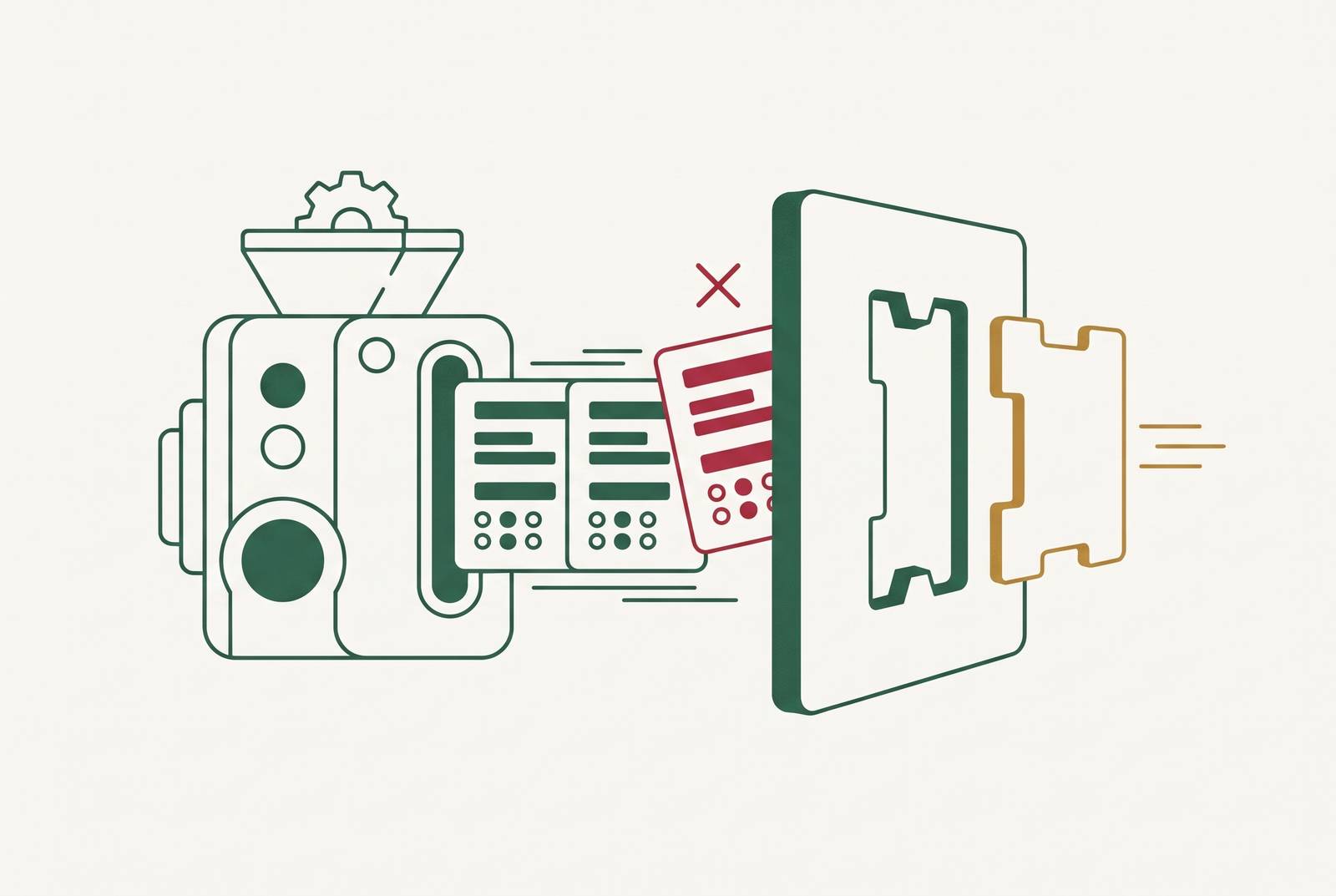
An AI study tool for AP classrooms and teachers needs current framework alignment, calibrated cognitive demand, diagnostic wrong answers, and feedback that explains gaps in understanding. Generic AI question generators fail College Board alignment because text that reads well does not ensure those qualities, and framework revisions make the mismatch worse.
Why generic AI question generators are not built for what College Board exams actually measure
A language model is rewarded for producing coherent, readable output. An assessment item has a different job. It must measure a defined skill under the rules of a particular curricular standard. A question can read well while testing something quite different from what its label says it tests.
Alignment therefore requires more than mentioning the right topic. Every item must satisfy standard alignment, difficulty calibration, distractor diagnosticity, answer-key exactness, and factual accuracy at the same time. This is a conjunctive constraint set, which is a formal way of saying that every lock needs its own key. A question that gets the facts right but has an unclear answer key fails. So does an unambiguous question that asks for recall when the learning objective requires analysis.
A generic generator's errors are structural. Its basic task is to produce plausible language. A prompt can describe the specification, but describing a rule is not the same as checking compliance. The item must make the student demonstrate the required kind of knowledge.
A familiar layout, a plausible scenario, and an authoritative explanation all make a question look finished. They do not establish what it measures. To see the mismatch clearly, the useful place to look is not the question's surface but the reasoning needed to answer it.
How weak distractors and misaligned cognitive demand undermine the quality of a practice question
The wrong answers often reveal the problem first. If they are obviously unrelated to the question, a student can eliminate them without knowing the subject. The item then rewards spotting the odd one out and leaves mastery of the learning objective untested. The correct answer may still get all the facts right. Yet the student has reached it through a side door that the assessment was supposed to keep shut.
A distractor should reflect a mistake a real student might make within the target framework. It makes an incomplete understanding visible. Writing one therefore requires more than collecting false statements about a topic. The wrong choice must fit the question well enough to draw a student who makes a particular mistake, and the standard must explain why that choice is wrong. Otherwise, it is less a diagnostic instrument than a cardboard opponent.
Cognitive-level mismatch creates a similar shortcut through the question itself. Generic generators tend toward recall because a fact-based answer is easier to validate as correct. But the application and analysis demanded by high-stakes AP and SAT items require students to judge a situation. Several options may appear defensible at first glance. The framework and the conditions in the question must establish why one is the correct answer.
Adding a scenario does not automatically fix this. A paragraph about a situation can still end by asking students to recall a definition, so they do the same thinking in a fancier costume. For a scenario to be aligned, it must make the student use the principle that the question tests. Its distractors must then reflect errors in that use. Both demands depend on a coherent model of the framework.
Statistical validation helps catch these failures as official items are built, but generic generators have no such validation loop. Chen et al.'s CLAIM pipeline research shows how hard this work still is even when a system is built with standards alignment in mind. The research reports weak inter-judge agreement on accept or reject decisions at production prevalence, with κ≈0.13. That is not a direct test of AP or SAT performance. The findings show how hard it is to judge whether generated items meet a curricular specification.
Why rolling AP framework revisions make currency lag a compounding, not incidental, problem
Even a well-written item can belong to the wrong exam. AP frameworks change on a rolling schedule, while a model's training data stops at a cutoff. The mismatch is not limited to a missing new fact. Revisions can alter units, question types, answer-choice counts, and section weighting. A generator can therefore produce internally coherent practice for a course structure that students are no longer being asked to follow.
AP Psychology makes the scale of that change concrete. Beginning in the 2024–25 school year, the course moved from nine units to five. It retired the Concept Application and Research Design FRQs and replaced them with the Article Analysis Question and Evidence-Based Question. The multiple-choice section also moved to fewer questions with four answer choices. These changes reach beyond the syllabus into the forms of work students must practice.
An old question can still get the psychology right. That does not make an old practice set an adequate model of the revised exam. A set built around retired free-response formats has students work on the wrong task, even if its explanations are clear. This is why factual accuracy cannot stand in for currency. The frame around the facts has changed.
AP Computer Science A illustrates another dimension of the problem. Its framework was reorganized into four units from the old ten, and the multiple-choice section is now worth 55 percent of the score. Weighting changes the balance of preparation. Practice built around the old arrangement can misrepresent both how the course is organized and how performance contributes to the result.
As AP moves toward digital delivery through Bluebook, changes to the format and rubric add to the work of keeping practice up to date. A model update may reduce one gap, but it does not establish an ongoing process for tracking the next revision. A model update also leaves weak distractors and the wrong cognitive demand in place. The two failures compound because an item can be carefully phrased, intellectually shallow, and structurally out of date at once. Better wording cannot repair the wrong blueprint.
What the digital SAT's adaptive format means for any practice tool built on linear question generation
The digital SAT adds a dimension that cannot be reduced to the content of individual questions. Its second module adjusts in difficulty based on performance in the first module. A flat list has no feedback loop like this. Even questions that are fully up to date cannot create that structure on their own.
Linear questions can provide practice with individual skills, but that is a narrower claim than preparing a student for the adaptive exam experience. A student practicing exclusively with non-adaptive sets does not rehearse the same pacing judgment or mental adjustment when the second module becomes harder or easier. Content practice and format practice are different jobs. A tool can do one without doing the other.
The relevant distinction is between generating questions and modeling an exam. A linear generator might improve its wording, replace stale content, and strengthen every wrong answer without changing how the practice session unfolds. It would still deliver a sequence that does not respond to first-module performance. For the digital SAT, alignment therefore includes both the relationship between modules and the quality of the items inside them.
What teacher usage patterns reveal about practitioner trust in generic AI for assessment
As of September 2025, a majority used generative AI at least sometimes to create or revise instructional materials, while fewer than half used it for lesson planning. More than a quarter used it to provide student feedback. Only a small minority used it for grading or assessment. Those patterns suggest that teachers are more willing to use AI for drafts than to trust it with high-stakes judgments.
The distinction has a clear practical basis. A draft can be useful before it is final, whereas feedback that misses a marking criterion creates AI waste that needs human cleanup. Demand for AI-assisted grading is genuine and growing, so the quality gap is not evidence that teachers lack interest.
But is this really a design problem, or just a prompting problem? Domain-constrained prompts produce better items than unconstrained prompts, and specialized framing helps direct a model toward the relevant standards. A generic request to “make a quiz” is not the strongest version of the approach. Better configuration can address some avoidable weaknesses.
The CLAIM research tests a much more serious approach. Its pipeline uses a curriculum knowledge dictionary that has 44,844 error-correction rules, along with adversarial self-review and multi-dimensional expert evaluation. Yet fill-in-the-blank items remain measurably weaker than multiple-choice items, and judges continue to show weak agreement on accept or reject decisions. Even extensive engineering leaves limits that a confident prompt cannot wish away.
Currency presents a separate limit on that defense. A model trained before a revision cannot infer an unseen course structure merely because a prompt asks it to be current. Supplying and maintaining the revised framework would be an additional source of grounding. At College Board's level of precision, constraints must be kept current and enforced together. A request for alignment is not proof of alignment.
The softer defense is that generic practice only supplements official materials. That narrows the promise without resolving the student's problem. A learner who cannot distinguish aligned practice from misaligned practice cannot reliably decide which supplementary questions deserve trust. Calling something “extra practice” does not stop it from training the wrong skill. An alternative must show which curriculum its questions are based on.
What curricular precision actually requires from a question generator — and how to evaluate whether a tool has it
Teachers and students evaluating tools need to examine the design behind the questions. Purpose-built, curriculum-anchored tools are the meaningful alternative because they organize generation around an external standard. That description still needs evidence. A product label cannot establish framework currency, item quality, or useful feedback any more than polished prose can. The test is whether the tool addresses each failure mechanism.
Current framework alignment means that a tool follows the units, question types, and section weighting now in use. It is an ongoing maintenance obligation. Psychology and Computer Science A show why, while the announced Computer Science Principles redesign for 2027–28 makes the future requirement explicit. A tool needs a documented framework version and an update history. Without those, “AP-aligned” leaves the most important time reference unstated.
Cognitive calibration requires the same specificity at item level. A topic label says what a question concerns, but not whether it asks for application, analysis, or synthesis. Diagnostic distractors then reveal how a student misunderstands that objective, rather than merely making the correct answer easy to spot. Difficulty alone is not enough. A hard recall question still does not become an analysis question by making students sweat.
Feedback completes the distinction between producing practice and supporting understanding. A useful response identifies where the student's thinking breaks down and connects that gap to the learning objective. A score alone cannot do that work. The tool also needs a quality loop that catches alignment failures before items reach students, rather than treating every generated question as ready for use. These are complementary requirements, one for improving the learner's understanding and one for controlling the material used to teach it.
The practical questions are therefore specific enough to demand specific answers. Does the tool document which framework version its items use and when that was last updated? Does it name the topic and the cognitive level each item targets? Does its feedback explain why a wrong answer is wrong in terms of the learning objective, or merely reveal the correct choice? For digital SAT practice, does it reproduce the adaptive module structure, or deliver a flat linear set?
Sources
- The Architect, the Adversary, and the Judge: Closed-Loop Generation of Standards-Aligned Assessment Items at Scale
- Scalable and Personalized Oral Assessments Using Voice AI
- Generating Plausible Distractors for Multiple-Choice Questions via Student Choice Prediction
- Automatic Generation of Multiple-Choice Questions
- The Impact of item flaws, testing at low cognitive level, and low distractor functioning on multiple-choice question quality
- Will It Teach as Intended? How Teachers Configure Educational AI Chatbots
- Assessing AI-Generated Questions' Alignment with Cognitive Frameworks in Educational Assessment · Pith